

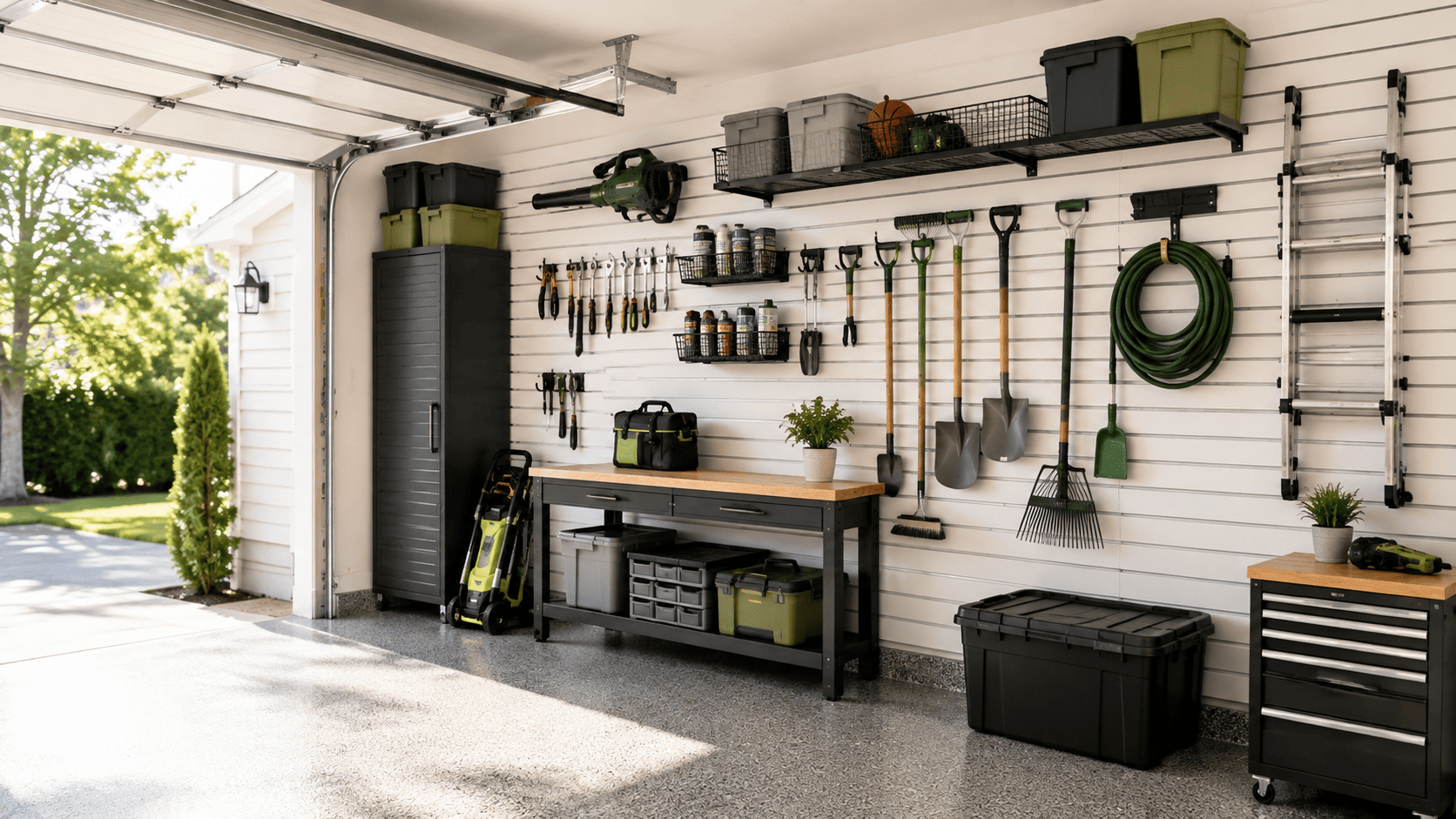
Garage slatwall organization works best when you choose a system that matches your wall structure, storage weight, and budget. For many homeowners, PVC slatwall panels offer a practical balance of moisture resistance, flexibility, and cost, while metal systems can suit heavier or commercial-style storage needs. Install the system according to the manufacturer’s stud-spacing and weight-rating guidance, then choose compatible hooks and shelves for the items you plan to store.
Whether you’re battling bikes, tangled tools, or seasonal gear, smart slatwall choices transform wasted wall space into secure, grab-and-go storage. This guide walks you through buying, budgeting, and installing a system built to last—steering clear of costly mistakes common to first-timers.
Key Takeaways
- PVC slatwall is the preferred choice for most garages—offering robust load ratings, moisture resistance, and a balance of price and durability.
- Anchor panels into wall studs (using InstallStrips system or lag bolts) for safe, long-lasting storage; never install slatwall directly to drywall.
- Budget $700–$1,000 for a DIY single-wall project, or $400–$800 more for professional installation, including basic accessories.
- What Is Garage Slatwall Organization?
- Which Slatwall Material Should I Buy for My Garage?
- How to Size, Plan, and Budget Your Slatwall Project
- Step-by-Step Guide: Buying & Installing Your Slatwall System
- Choosing Hooks, Shelves, and Accessories
- Advanced Analysis & Common Pitfalls
- DIY vs Professional Installation
- Maintenance, Durability & Long-Term Care
- Recommended Suppliers & What to Look For
- Final Buying & Installation Checklist
- FAQs
What Is Garage Slatwall Organization?
Garage slatwall organization is a wall-mounted panel storage system designed to reclaim floor space and keep gear, tools, and bikes accessible yet off the ground. Slatwall panels feature horizontal grooves or “slats” that accept specially designed hooks, bins, baskets, cabinets, and racks for flexible, adjustable, and safe storage. Compared to shelf units or pegboard, slatwall systems allow quick reconfiguration as your needs change—and handle heavier and larger items safely when properly anchored.
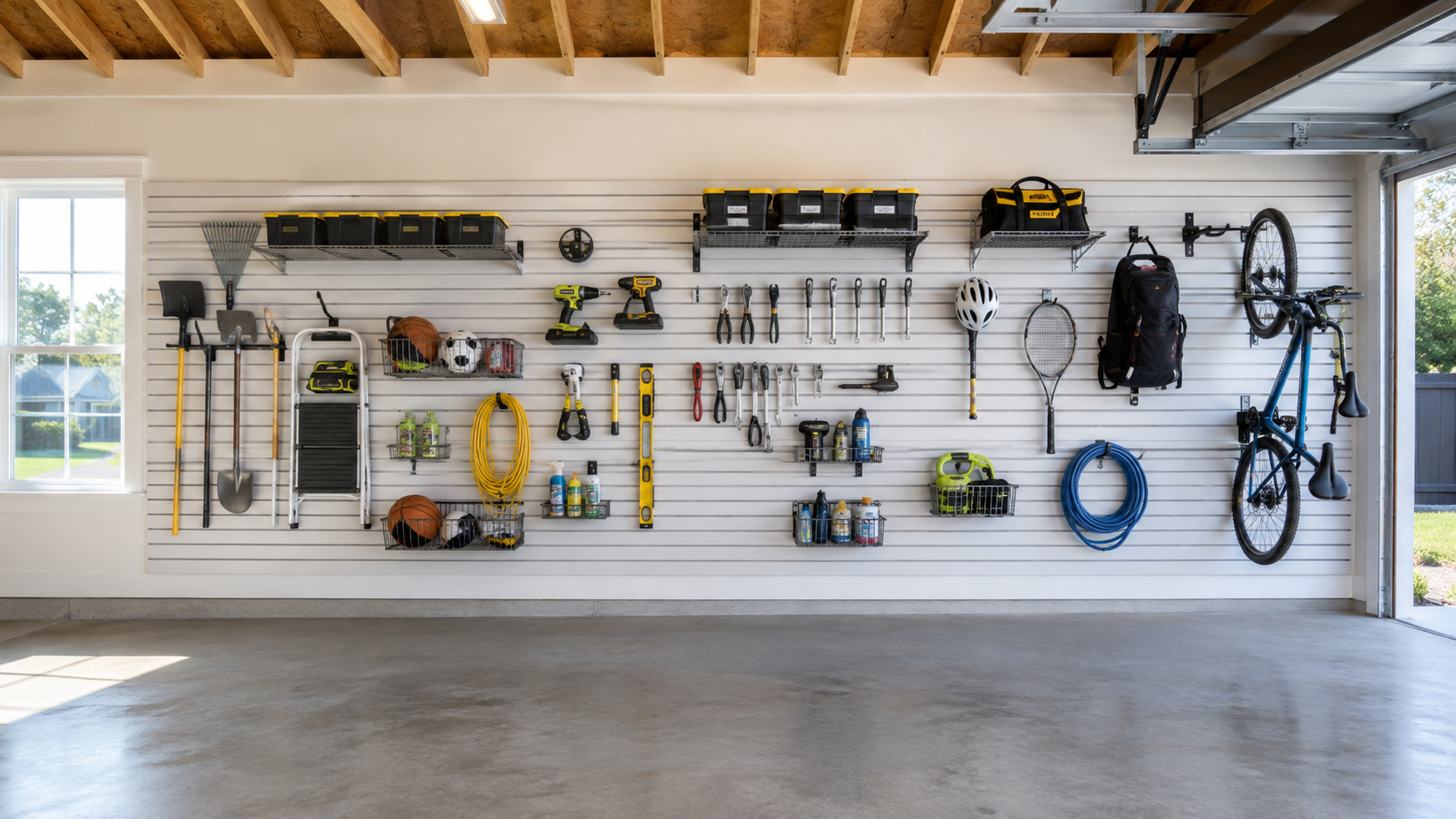
Who benefits? Homeowners with cluttered garages seeking to:
- Maximize usable floor space for cars, workbenches, or home gyms
- Safely store everything from hand tools to bikes and outdoor gear
- Customize storage for changing needs—without permanent fixtures
However, the system must be chosen and installed to match your garage’s structure, expected load, and local climate—missteps here can cause expensive failures or unsafe storage. This guide breaks down what to buy, how much it will cost, and how to do it right.
Which Slatwall Material Should I Buy for My Garage?
For nearly all residential garages, PVC slatwall panels are the recommended starting point. They provide the best combination of load capacity (up to ~75 lb/sq ft), moisture resistance, and moderate price, according to sources like Trusscore and MKESlatwall (Trusscore, MKESlatwall). MDF is only suited to very light loads and should be avoided in humid or unheated garages. Metal or aluminum-core panels handle the heaviest loads but cost more and demand more robust installation.
| Material | Cost Range ($/sq ft) |
Load Capacity | Moisture Resistance | Finish Options | Best For |
|---|---|---|---|---|---|
| MDF | $10–$20 | 15–25 lb/sq ft | Low – may warp/swelling in humidity | Varied (paintable) | Light hand tools in climate-controlled space |
| PVC | $25–$35 | Up to 75 lb/sq ft | High – water/weather resistant | Fair; mostly grays/whites, some colors | General purpose garage storage |
| Metal / Composite | $35–$75+ | 100+ lb/sq ft | Very high; needs corrosion protection | Industrial, often powdercoat | Heavy shelves, tool chests, pro settings |
Summary: For most home garages, PVC is the sweet spot unless you have a climate-controlled room and carry only light, non-valuable equipment (then MDF is OK). Upgrade to metal/composite only for commercial use or when planning integrated steel shelving or extremely heavy tool storage. See more: MDF vs PVC slatwall
For a deeper technical dive on material pros, cons, and lifespan, check out our Garage storage budgeting guide and PVC vs MDF vs Metal: material comparison.
How to Size, Plan, and Budget Your Slatwall Project
Start by measuring your wall space and predicting the types (and weight) of items you’ll hang. Separate zones for bikes, power tools, and light items like sports gear. Always ensure heavy items align with studs for safe support.
- PVC panels: $25–$35 per sq ft; mainstream 8×4 panels usually $280–$400.
- Metal/composite: $35–$75+ per sq ft or $100–$150+ per panel; higher installation complexity.
- Whole-wall kits: $499–$899 for 8×8 ft. Full-garage: $1,499–$2,999+ (StoreWALL estimates).
Installation:
- DIY single wall: $700–$1,000 including basic hooks and shelves.
- Pro install: +$400–$800 more for a single wall; masonry/multi-wall jobs $600–$1,200+ (market guide).
| Project Scope | DIY Total | Professional Install |
|---|---|---|
| Single wall (8×4–8×8 ft) | $700–$1,000 | $1,100–$1,800 |
| Full garage (16×8–24×8 ft) | $1,500–$3,000+ | $2,000–$4,000+ |
Use our garage storage budgeting guide for a custom calculator and savings tips.
Step-by-Step Guide: Buying & Installing Your Slatwall System
Follow these steps for a secure, long-lasting slatwall installation:
- Measure & Plan: Map out your wall, note stud spacing (usually 16″ or 24″ on-center), and assign zones for heavy vs light items.
- Buy Materials: Select slatwall panels (PVC for most), heavy-duty manufacturer-matched hooks/shelves, and installation accessories (InstallStrips system if recommended).
- Prep the Wall: Find all studs with a reliable stud finder. Mark their locations on the wall. For masonry, mark where anchors will go.
- Gather Tools: Drill, impact driver, level, tape measure, stud finder, screws or lag bolts (length per manufacturer), and protective gear.
- Mounting:
- For heavy duty, use InstallStrips (recommended by StoreWALL and Proslat) into studs, or direct-mount panels using structural screws—never fasten panels only to drywall.
- For masonry: Use concrete anchors or Tapcons rated for the expected load.
- Panel Alignment: Use a 4-ft level to keep panels straight and maintain consistent spacing between fasteners to avoid panel bowing or misalignment.
- Install Accessories: Once panels are up, start with the heaviest hooks or shelves, verifying each is well engaged and doesn’t flex the panel. Distribute weight across multiple slats/studs if possible.
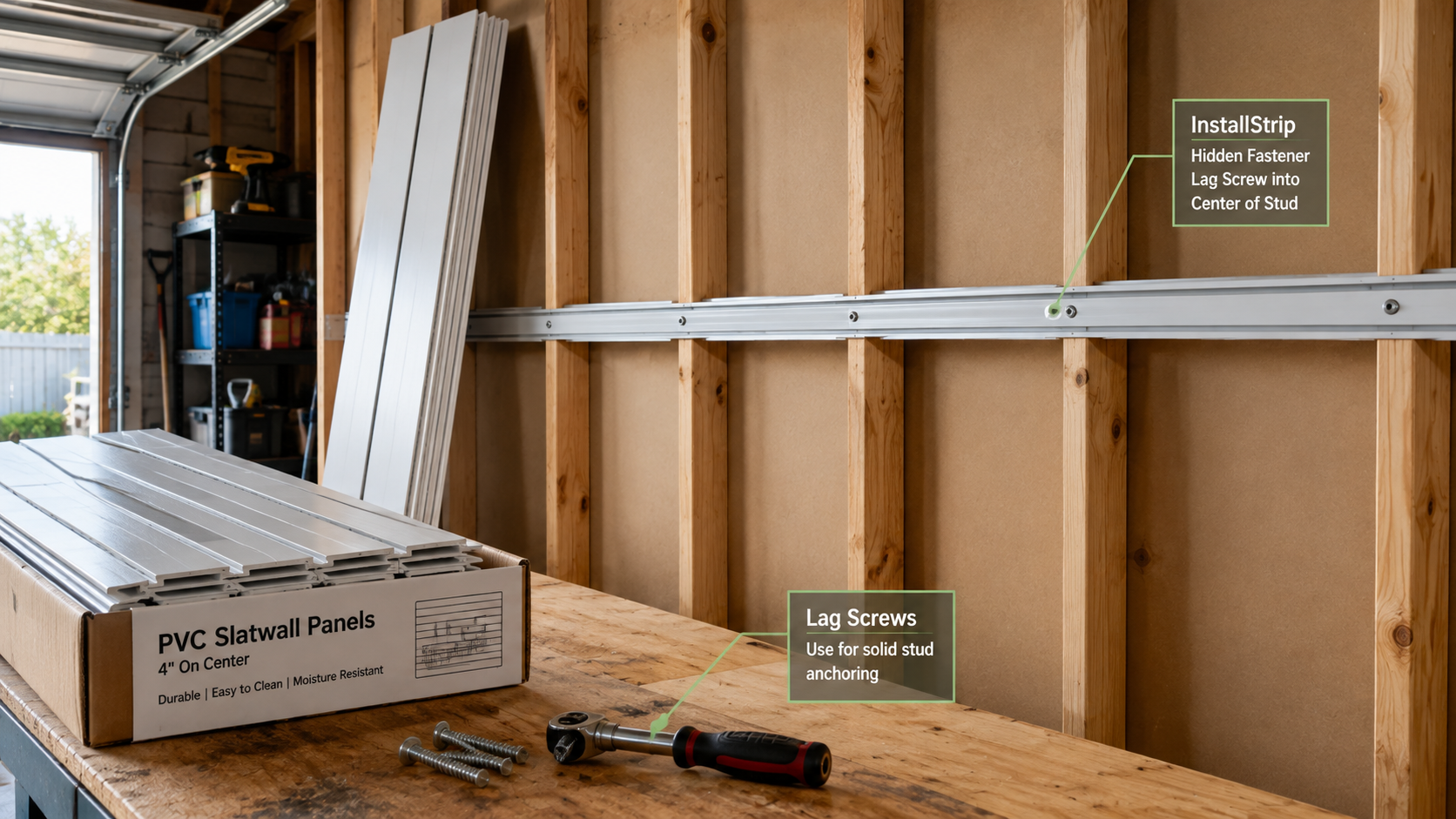
For details on picking anchors or fasteners by wall type, see our resource: Mounting hardware & anchor selection for garage walls.
Choosing Hooks, Shelves, and Accessories
Choose accessory hooks, baskets, or racks made specifically for your slatwall’s slat profile—preferably from the same manufacturer. Rubber-coated “lock-in” hooks provide added security for heavy or precious items. Avoid generic or off-brand hooks; compatibility failures (poor fit or hooking) are a top complaint in forums and product reviews (Houzz).
| Accessory Type | Typical Load Rating | Best Use | Pro Tip |
|---|---|---|---|
| Metal Lock-in Hook | 25–50 lb | Bikes, ladders, power tools | Look for rubber-coated tips |
| Standard Plastic Hook | 5–15 lb | Sports gear, cords, garden tools | Use only for light items |
| Deep Basket/Shelf | 25+ lb (stud-mounted) | Bulk storage (balls, helmets, bins) | Check if needs extra back support |
For a full compatibility guide, see Hook and accessory selection for slatwall systems.
Advanced Analysis & Common Pitfalls
Common mistakes in garage slatwall organization projects include:
- Mounting to drywall alone: This is unsafe for heavy tools or bikes—always hit studs or use appropriate anchors in masonry (StoreWALL Q&A).
- Improper fastener selection: Use lag screws into wood studs, or concrete anchors for masonry—structural screws for metal studs.
- Poor leveling and misalignment: Results in accessories not hanging flat or panels bowing under load.
- Mismatched accessories: Incompatible hooks may slip/fall; check that the “mouth” of each hook fits your slat’s profile and locks in solidly.
- Overloading single hooks: Spread heavy items across multiple slats and hooks; never trust a lightweight plastic hook for substantial loads (The Consumers Guide).
| Pitfall | Consequence | How to Avoid |
|---|---|---|
| Mounting to drywall | Panel failure, collapsing storage | Always anchor to studs or use rated anchors for heavy loads |
| MDF in humid garages | Warping, swelling, eventual collapse | Choose PVC or metal for unconditioned or damp spaces |
| Mismatched hooks/accessories | Compatibility issues, dropped items | Buy manufacturer-tested, lock-in, or recommended hardware |
| Uneven panel install | Accessories won’t fit evenly, looks messy | Pre-layout panels, check with long level |
For a deep-dive into budget mistakes and cheap slatwall alternatives see: Garage Organization Ideas on a Budget.
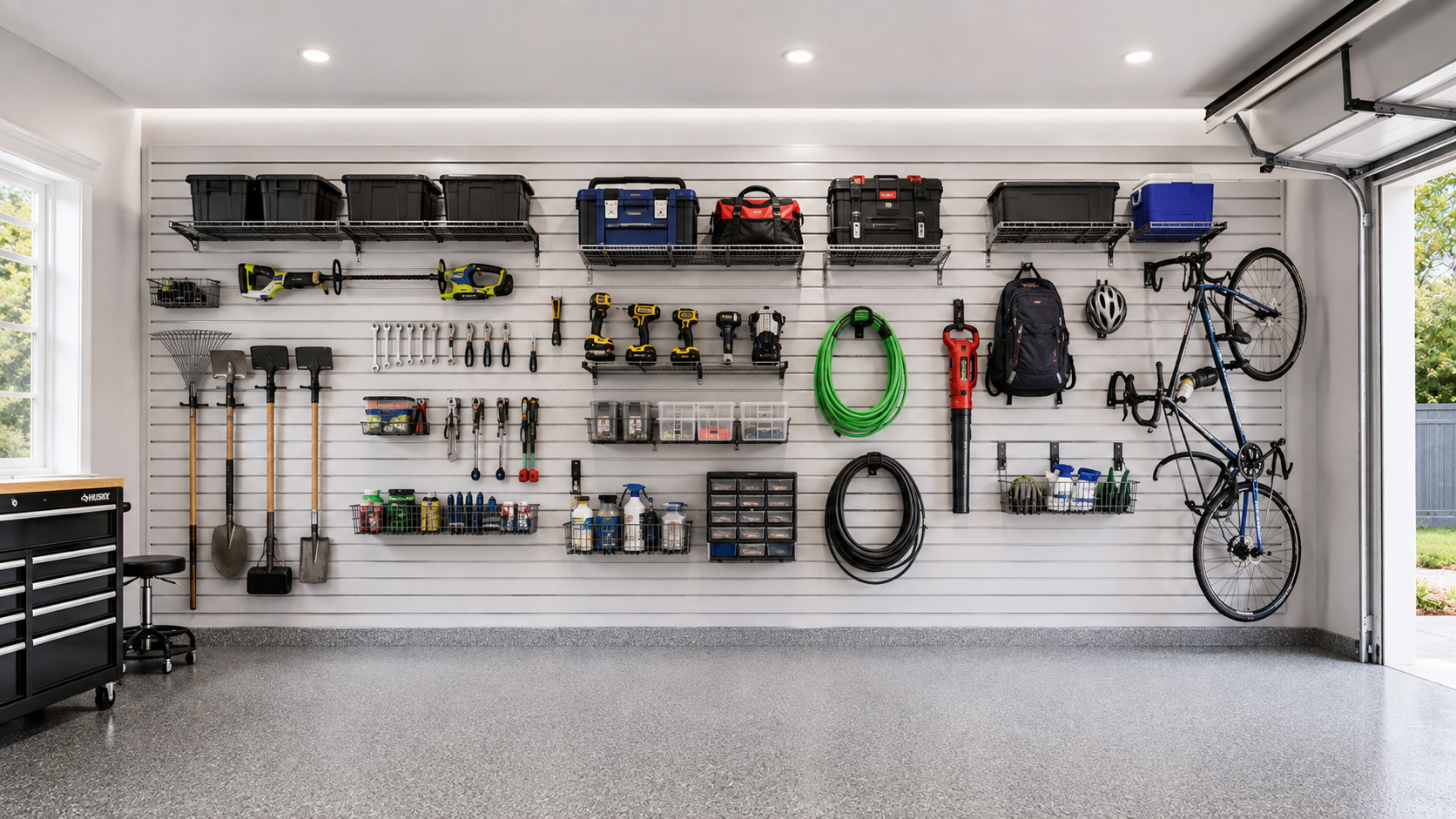
DIY vs Professional Installation
Most homeowners with basic DIY skills can install slatwall if anchoring into standard wood studs. Expect to spend a weekend for prep and installation. If your garage has masonry/concrete walls, nonstandard framing, or you want a seamless/high-end result, hiring a pro is wise.
| Scenario | DIY? | Hire a Pro? |
|---|---|---|
| PVC panels, normal stud wall | Yes – straightforward | Optional, if comfort level is low |
| Heavy duty/metal panels | Maybe – requires strength/skill | Recommended |
| Masonry/concrete walls | Not recommended | Recommended (proper tools/anchors) |
| Warranty priority | Risk voiding (if improper install) | Often required for warranty |
For installer vetting tips, see How to find and vet a slatwall installer.
Maintenance, Durability & Long-Term Care
PVC slatwall is virtually maintenance-free: periodically check for loose fasteners and clean grooves using a soft brush. Metal panels last for decades if their finish is intact, but check for corrosion near unsealed edges in humid zones. MDF panels need annual inspection for swelling or delamination; if panels show warping, reduce load and consider upgrading to PVC.
- Annually verify all loaded hooks/shelves do not flex or dig into panels.
- Re-tighten as needed and avoid overloading any single accessory.
- Clean panels with damp cloth; avoid harsh abrasives on painted/metal finishes.
For more on slatwall maintenance, see our detailed guide on garage storage budgeting and upkeep.
Recommended Suppliers & What to Look For
Top-rated brands (2024–2026) include Proslat, StoreWALL, Wall Control, Gladiator (GearWall), Trusscore, MKE Slatwall, NewAge, and in-store options at Home Depot and Lowe’s. When shopping, compare:
- Material type (PVC, aluminum core, metal) and thickness
- Load rating per panel or per square foot
- Mounting hardware included (InstallStrips, direct mount, etc.)
- Available accessory ecosystem (lock-in hooks, baskets, cabinets)
- Finish/color customization
- Warranty and installer network
- Proslat: Best all-purpose PVC, wide accessory range, $25–$35/sq ft.
- StoreWALL: Heavy-duty panels/accessories, InstallStrips system, $35–$50/sq ft.
- Gladiator (GearWall): Easy starter kits, big-box pricing, $30–$40/sq ft.
- Trusscore: Top moisture resistance, premium pricing, $40+/sq ft.
- Wall Control: Metal panels; best for tool-heavy garages, $100–$150+/panel.
Check the full panel and accessory options at NewAge Products or see budget garage storage ideas for entry-level choices.
Final Buying & Installation Checklist
Printable Slatwall Buying & Install Checklist
- Measure wall area (length × height)
- Select material (PVC, metal, or MDF) based on environment and load
- Choose accessories (heavy duty hooks, shelves, bins) from trusted manufacturer
- Plan layout for heavy vs. light zones (align heavy shelves with studs)
- Order sufficient panels (add 10% for cuts/mistakes)
- Buy matching fasteners (lag bolts or InstallStrips per manufacturer)
- Prep install tools: stud finder, drill, level, tape measure, safety glasses
- Mark all studs & check for obstructions
- Check accessory compatibility with slat profile
- Estimate total cost (panels + accessories + installation labor if hiring)
- Confirm warranty and installer requirements
- Complete pre-install safety inspection: verify anchors, fastener lengths, panel load ratings
For more step-by-step prep lists, download our full slatwall tool and buying worksheet.
Choosing the right garage slatwall organization system means weighing material, load, and wall requirements—then doing a careful install anchored to studs for safe, lasting results. PVC is the default winner for most homes, while metal suits heavy-duty garages, and MDF remains a risky budget option. Let your needs, not just price, drive your decision—and remember: matched accessories and careful mounting are critical to long-term utility.
Ready to get started? Measure up, select your system, and reclaim your garage—one organized wall at a time.
FAQs
How much weight can PVC slatwall safely hold per square foot and is it enough for my tools?
PVC slatwall panels from major brands are rated for up to 75 lb per square foot when properly anchored to wall studs. This is sufficient for tools, bikes, and most household gear (Trusscore, MKE Slatwall). For very heavy shelving or equipment, consider metal or aluminum-core panels.
Can I mount slatwall directly to drywall or do I need to find studs or use InstallStrips?
You must anchor slatwall panels to wall studs using lag bolts or manufacturer-supplied InstallStrips for safe load support. Never mount heavy-duty slatwall to drywall alone—failure risk is high. For masonry, use rated concrete anchors.
Which slatwall accessories (hooks/shelves) are safest for heavy items and how do I check compatibility?
Lock-in or manufacturer-branded metal hooks with rubber coating are best for heavy items. Always check that the accessory matches your panel’s slat profile and that its weight rating is above your planned load. See our accessory compatibility guide for tips.
What should I budget for a DIY single‑wall slatwall system versus hiring a professional installer?
DIY single-wall installs typically cost $700–$1,000 including basic hooks and shelves. Add $400–$800 for professional installation labor. Larger or masonry jobs may cost more. Calculate using wall area and panel price per square foot.
Is MDF slatwall OK for an unheated or humid garage, or should I always pick PVC/metal?
MDF is not recommended for unheated or humid garages—it can warp and lose strength when exposed to moisture. PVC or metal are the preferred choices for longevity and safety in such environments (Garage Force).