

Table of Contents
- Why Plastic Storage Is a Bigger Problem Than You Think
- The Rise of Natural and Recycled Materials in Home Organization
- Room-by-Room Sustainable Storage Swaps
- How to Evaluate an Eco-Friendly Storage Product
- Top Sustainable Storage Brands Worth Knowing
- Your Eco-Shopper’s Checklist Before You Buy
- Make the Switch to Sustainable Storage Today
Walk down the storage aisle of any big-box store and you’ll still find it dominated by plastic — bin after bin of polypropylene, PVC, and low-grade acrylic that snaps, yellows, and ends up in a landfill within a few years. But a quiet revolution is happening in the home organization space. Sustainable storage solutions have moved well beyond the realm of craft-fair novelties into beautifully designed, seriously functional products you’ll actually want in your home. Whether you’re reorganizing your kitchen pantry or finally tackling the garage, there has never been a better time to swap single-use plastic for materials that are gentler on the planet — and far more pleasing to the eye. Remembering the importance of a sustainable storage solutions will help.
Why Plastic Storage Is a Bigger Problem Than You Think
Most of us don’t think twice about tossing a cracked plastic bin into the recycling bin, but the reality is sobering. Rigid plastics used in home storage products (polypropylene, polystyrene, ABS) are rarely accepted by curbside recycling programs and almost never actually recycled. They shed microplastics throughout their lifespan, release volatile organic compounds (VOCs) indoors, and often contain additives like BPA, phthalates, and flame retardants that have been linked to endocrine disruption. Remembering the importance of a sustainable storage solutions will help.
Beyond personal health, the sheer volume of plastic storage goods in circulation is staggering. Americans discard millions of plastic organisational products annually. Choosing eco-friendly home organization products isn’t just a lifestyle preference — it’s a meaningful reduction in your household’s plastic footprint. Remembering the importance of a sustainable storage solutions will help.
The Rise of Natural and Recycled Materials in Home Organization
The good news is that nature has always offered excellent alternatives, and modern manufacturing is making them even better. Here are the materials leading the sustainable storage movement:
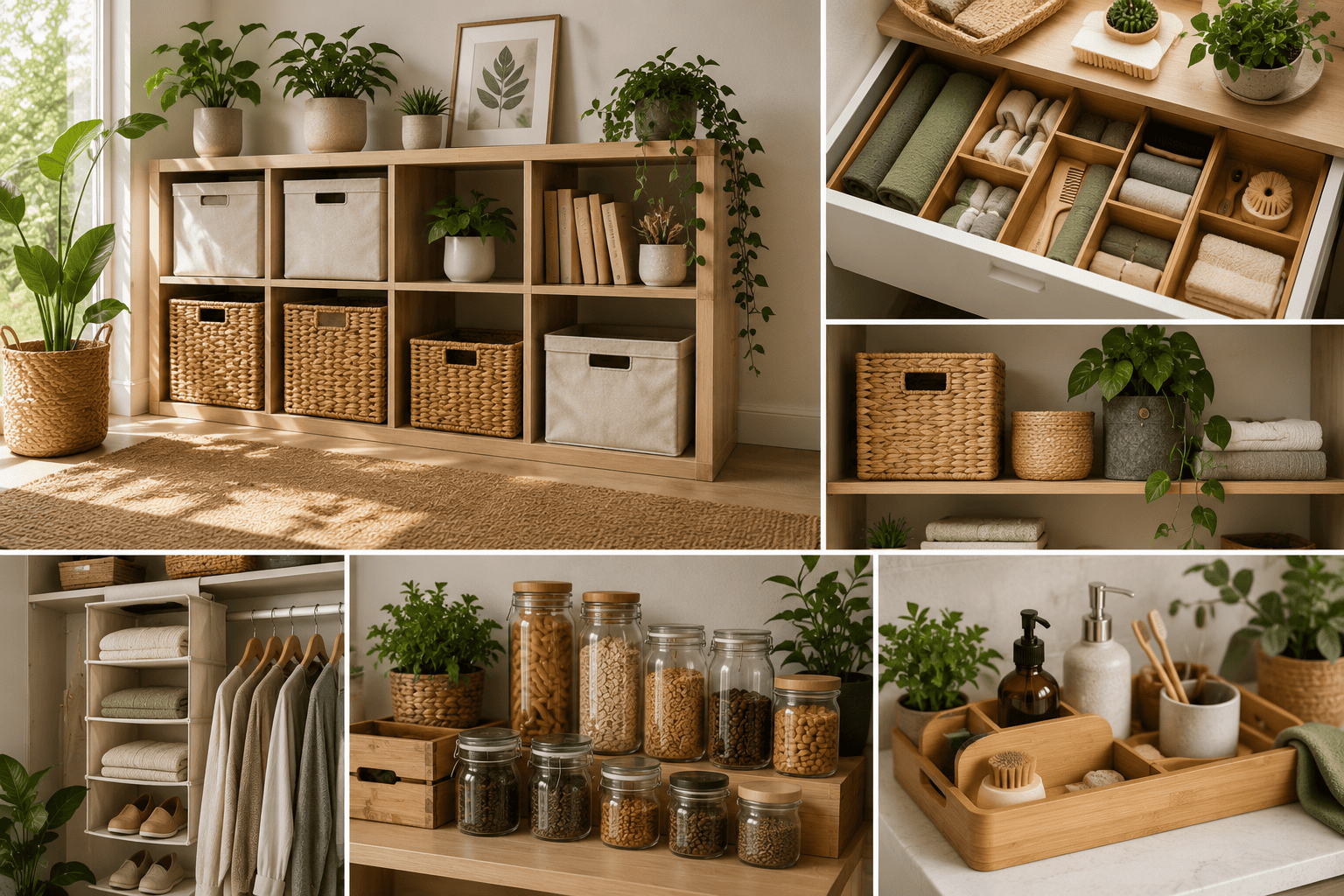
- Bamboo: One of the fastest-growing plants on earth, bamboo requires no pesticides and regenerates from its own root system. Best bamboo and natural material organizers are prized for their strength, natural antibacterial properties, and warm aesthetic. Bamboo drawer dividers, utensil trays, and shelf organisers are now widely available and extremely durable.
- Rattan and Seagrass: These natural plant fibers are handwoven into baskets, bins, and shelf inserts that add texture and warmth to any room. They’re biodegradable, compostable at end of life, and support artisan communities in Southeast Asia when sourced responsibly.
- Recycled Cotton and Canvas: Storage bins and baskets made from recycled textile offcuts or organic cotton are soft-sided alternatives to plastic totes. Look for GOTS (Global Organic Textile Standard) or OEKO-TEX certifications.
- Glass: For the kitchen especially, glass containers and jars offer a completely plastic-free kitchen storage solution. Glass is infinitely recyclable, doesn’t absorb odors or stains, and is safe for food contact without any chemical leaching concerns.
- Recycled Metal and Steel: Powder-coated steel bins and wire baskets made from recycled content are incredibly durable — think decades, not years — and fully recyclable at end of life.
- Recycled Plastics: When plastic is unavoidable, opt for products made from post-consumer recycled content (PCR). Recycled storage bins made from ocean-bound or post-consumer plastic keep waste out of landfills and reduce the demand for virgin petroleum-based materials.
Room-by-Room Sustainable Storage Swaps
Kitchen and Pantry
The kitchen is the easiest place to start eliminating plastic storage. Replace mismatched plastic containers with a set of glass jars for dry goods — oats, pasta, flour, and spices all store beautifully in glass, and the clear sides double as an inventory system. Bamboo drawer organisers keep utensils tidy without a scrap of plastic. For sustainable pantry organization, seagrass baskets are perfect for grouping canned goods, onions, and potatoes on open shelving. Check out our full guide to pantry organization ideas for more inspiration on building a functional, eco-friendly pantry from scratch.
Closets and Bedrooms
Swap out flimsy plastic drawer organizers and fabric bins made from synthetic fibers for organic cotton or linen alternatives. Rattan baskets make excellent shelf bins for folded sweaters, accessories, or shoes. Bamboo shelf dividers keep stacks of clothing upright without the need for bulky plastic dividers. For a full system overhaul, our guide to the best closet organization system walks you through sustainable frameworks for every closet size. If space is tight, also see our tips on storage solutions for small bedrooms that work beautifully with natural material bins and baskets. Eco-friendly closet organizers made from solid wood or FSC-certified birch plywood are also worth the investment — they’ll outlast any flat-pack plastic alternative.
Garage and Utility Spaces
The garage presents more of a challenge since heavy-duty storage demands durability. Here, recycled storage bins made from PCR high-density polyethylene (HDPE) are your best bet — they handle the rigors of a garage while keeping plastic waste out of landfills. Powder-coated steel shelving is another eco-smart choice: it’s made largely from recycled steel scrap and will last indefinitely. Our round-up of garage organization ideas on a budget includes several sustainable options that won’t break the bank.
Living Spaces and Entryways
Woven seagrass and water hyacinth baskets are ideal for blanket storage, toy organisation, and entryway catch-alls. They photograph beautifully, complement virtually every interior style, and perform the exact same function as a plastic tote — just without the environmental cost. And if the thought of a full home purge feels overwhelming, our guide on how to declutter a small home will help you pare back before you invest in new organisers, so you’re only buying what you truly need.
How to Evaluate an Eco-Friendly Storage Product
Not every product marketed as “sustainable” or “natural” is the real deal. Use these criteria before you buy:
- Look for third-party certifications. FSC (Forest Stewardship Council) for wood and bamboo products, GOTS or OEKO-TEX for textiles, and Cradle to Cradle certification for any category signal genuine accountability.
- Consider product lifespan. A bamboo organizer that lasts 15 years is more sustainable than a recycled-plastic bin that breaks in two. Durability is a core sustainability metric.
- Ask about end-of-life. Can the product be composted, recycled, or returned to the manufacturer? Brands with take-back programs or biodegradable products score higher on true lifecycle sustainability.
- Check sourcing transparency. Responsible brands disclose where their raw materials come from and can verify fair labor conditions throughout their supply chain.
- Avoid greenwashing red flags. Vague terms like “natural,” “green,” or “earth-friendly” without supporting detail are marketing language, not certification. Dig deeper.
Top Sustainable Storage Brands Worth Knowing
Several brands have built their entire identity around eco-friendly home organization products with transparent sourcing and rigorous material standards:
- Bambu: Specializes in certified organic bamboo kitchen and home products, including drawer organizers and food storage solutions.
- Naturehome: Offers bamboo and solid wood storage options with FSC certification and non-toxic finishes.
- Iris USA (EcoBox line): Their recycled-content storage bins are made from PCR plastics and designed for heavy-duty use.
- Korbo: Wire storage baskets made from 100% recycled Swedish steel with a lifetime guarantee — the gold standard of sustainable durability.
- Wovn Home: Handcrafted seagrass and rattan baskets sourced through fair-trade cooperatives.
Your Eco-Shopper’s Checklist Before You Buy
Before adding any storage product to your cart, run through this quick checklist:
- ☑ Is the material natural, recycled, or certified sustainable?
- ☑ Does the brand offer supply chain transparency?
- ☑ Is there a third-party certification to back up the eco claims?
- ☑ Will this product last more than five years with normal use?
- ☑ Can it be composted, recycled, or responsibly disposed of at end of life?
- ☑ Am I buying this because I genuinely need it — or just reorganizing clutter?
That last question matters more than any label. The most sustainable purchase is often no purchase — repurposing glass jars from your pantry, using existing baskets in new ways, or simply decluttering until what you own fits without extra containers.
Make the Switch to Sustainable Storage Today
You don’t have to overhaul your entire home overnight. Start with one drawer, one shelf, or one room. Replace a cracked plastic bin with a seagrass basket. Swap your plastic food containers for glass. Choose sustainable storage solutions the next time something needs replacing rather than running back to cheap plastic defaults. Each small swap adds up — for your home’s aesthetic, for your indoor air quality, and for a planet that genuinely benefits when more of us choose materials that work with nature rather than against it. The products are beautiful, the impact is real, and your organized home will feel all the better for it.