

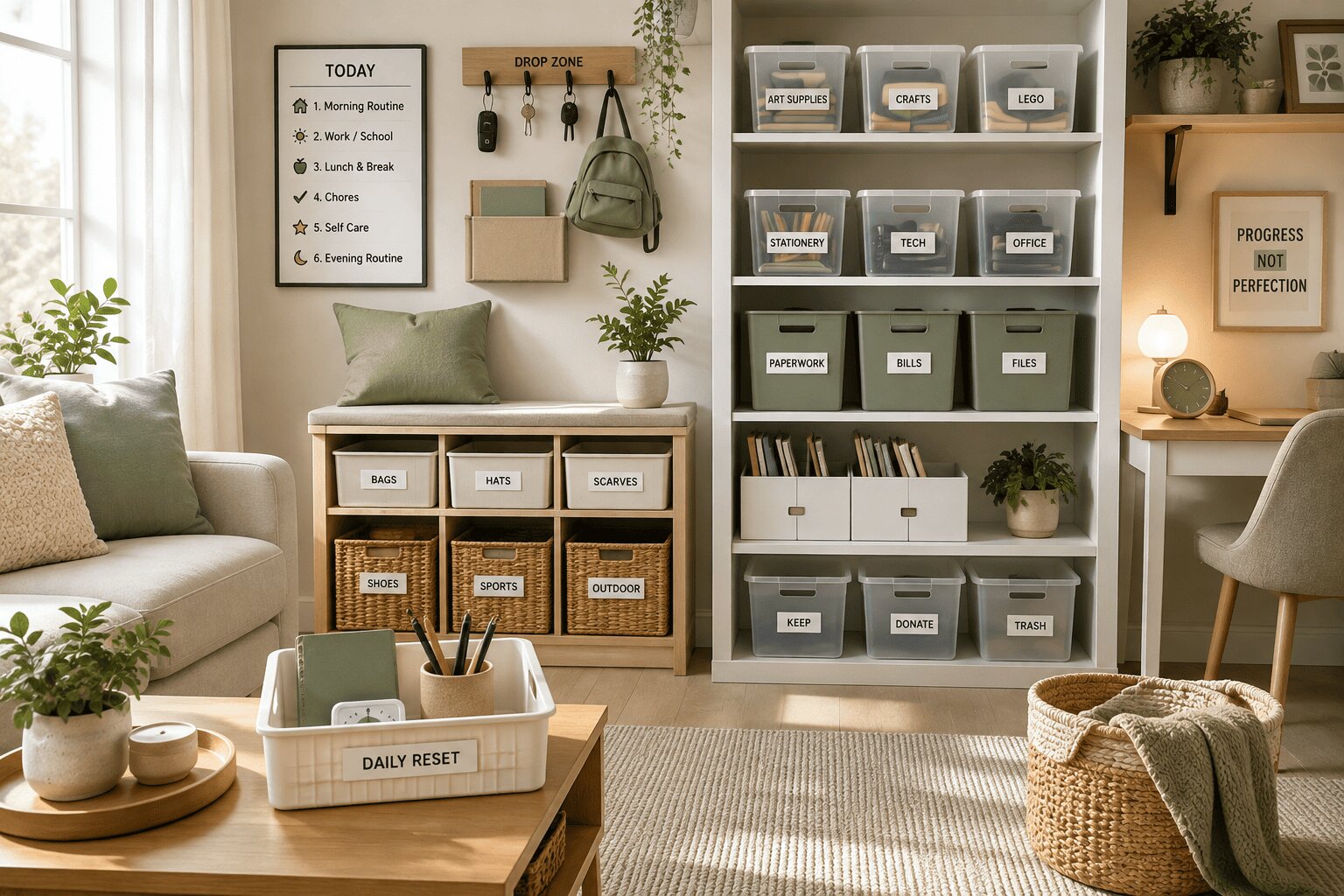
ADHD-friendly organization system isn’t about picture-perfect pantries or color-coded spreadsheet apps. It’s about making your home work with your brain—quick, visual, and forgiving of “motivation slumps.” This guide is a step-by-step, room-by-room system developed for adults with ADHD, designed to maximize visibility, minimize choices, and make daily resets almost impossible to forget.
Key Takeaways
- ADHD brains thrive on external, visible organization systems—out of sight usually means out of mind.
- Stick to 2–3 categories per space and use bold labels, clear bins, and clear “zones” to make tidying nearly automatic.
- Short, timer-based resets and social support (like body-doubling) keep maintenance low-effort and sustainable long-term.
- Why ADHD Needs Different Organization Rules
- Room-by-Room Step-by-Step: The ADHD-Friendly Organization System
- Advanced Analysis & Common Pitfalls
- Conclusion
- FAQ
Why ADHD Needs Different Organization Rules
Adults with ADHD have a unique executive-function profile—weak working memory, difficulty starting tasks, and a preference for visual over abstract cues. According to the CDC, roughly 15.5 million US adults lived with ADHD in 2026, and more than half weren’t diagnosed until adulthood.[1] These challenges explain why standard, “hide-everything” organization systems backfire: the effort to remember what’s behind which drawer or app creates overwhelm rather than order.
Research confirms that ADHD brains operate best when everything important is visible and routines take seconds, not minutes. This isn’t a matter of willpower; it’s a design problem.
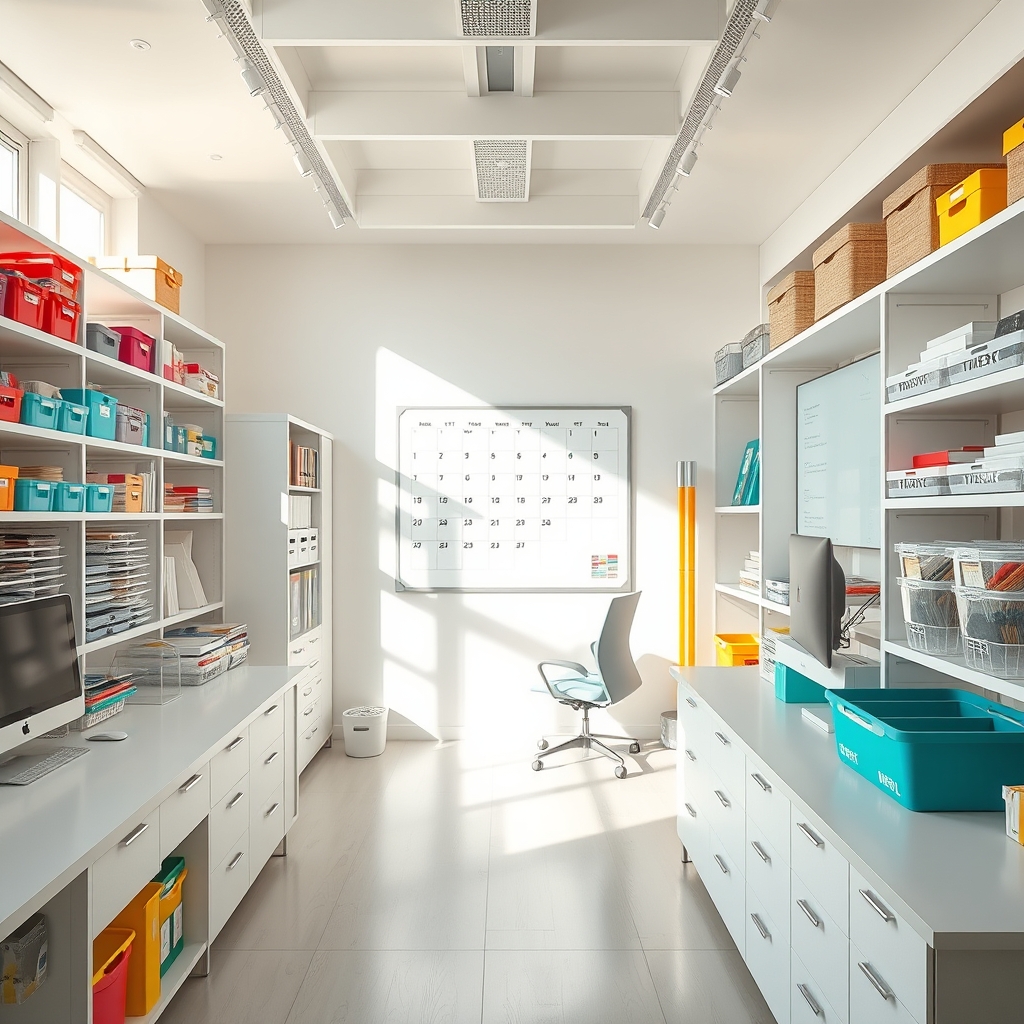
Systems that prioritize bold visual cues, minimal steps, and obvious feedback loops work far better than hidden or complex environments.[3] Adherence rises when the path of least resistance is also the “right” path.
Room-by-Room Step-by-Step: The ADHD-Friendly Organization System
This room-by-room ADHD-friendly organization system prioritizes clarity and speed. It’s easy to set up with minimal purchases or DIY. Here’s exactly how to make it happen across your home:
- Entry/Launch Pad: Install a low shelf or open hooks by the door for keys, wallet, masks, and sunglasses. Use a wide, clear tray labeled “GO.” Place bags and shoes underneath. See decluttering step-by-step.
- Kitchen/Pantry: Assign just 2–3 categories per shelf (ex: “Snacks,” “Breakfast,” “Dinner”). Use clear bins and large labels—no hidden baskets. Place daily-use items at eye level or on countertops. For a full system, visit our pantry organization guide.
- Bedroom/Wardrobe: Use open shelves or see-through drawers for “grab-and-go” clothing options. Limit folding; hang or toss items in labeled bins (for example, “Work,” “Lounge,” “Laundry”). Find more small bedroom storage ideas here.
- Desk/Workspace: Keep the desktop clear by storing essentials in upright holders or shallow trays. Anchor routines with a visual checklist and a wall calendar—physical, not digital.[5] For more work-from-home systems, check out our home office setup guide.
- Closet & Laundry: Separate clothes into “Worn Once,” “Dirty,” and “Clean”—just three zones. Use open baskets for each. Skip complicated folding or organizing by color (unless that actually helps you). For advanced closet tips, visit our post on closet organization systems.
- Under Sink/Bathroom: Store frequently used items in shallow, open bins. Attach visual labels (like “Teeth,” “Skin,” “Hair”) directly to the containers or inside cabinet doors.
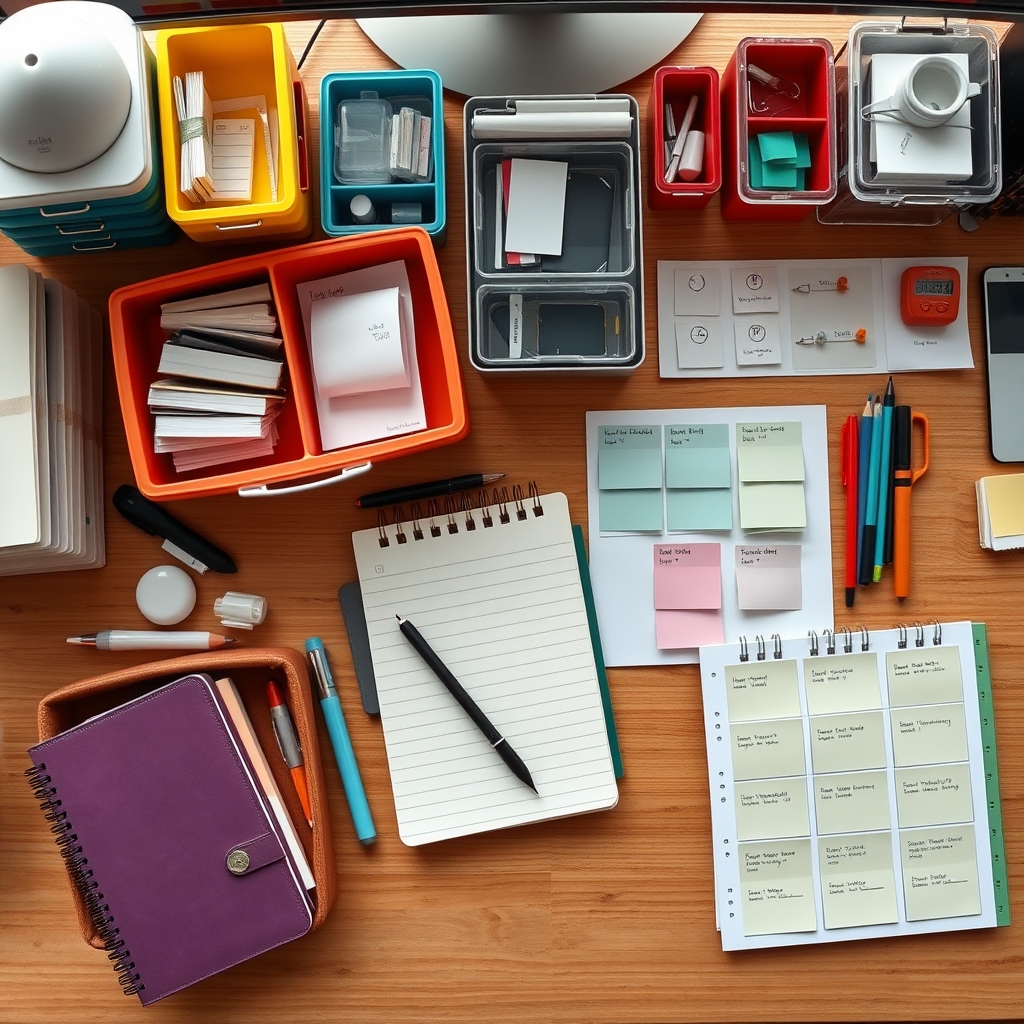
Shopping Kit: Budget & Premium Options
- Clear bins (various sizes), open trays, cubby shelves
- Extra-large sticky notes or dry-erase labels
- Bold markers or label maker (large font)
- Simple timer (manual or digital)
- Hooks, clipboards, small baskets for reset stations
- Premium: see-through modular drawers, slatwall pegboards, Time-Timer, color-coded bins, smart plugs for visual lights
Quick-Reset Stations & Micro Kits
Set up a small “reset kit” in each major room: one simple basket with a 10-minute timer and a short checklist (laminated or on a dry-erase card). When you notice things piling up, just grab the basket and follow the steps. This, according to research, dramatically increases the rate of successful resets.[5]
Personalization & Participation
Measure what matters: Can you reliably find your stuff? How often do you use the reset kit? Keep a whiteboard tally or snap progress pictures. Participatory approaches (adjusting your system each week) keep the process sustainable.[9]
Advanced Analysis & Common Pitfalls
No organization system is perfect, and ADHD-friendly setups have their own traps. Here’s what the research and real-world feedback highlight:
| Common Pitfall | Why It Happens | How to Fix Fast |
|---|---|---|
| Hidden storage (drawers, closets out of sight) | Items are forgotten or duplicated. “Out of sight, out of mind” is literal.[2] | Switch to open shelving, clear bins, or labeled trays placed in plain sight. |
| Too many categories or bins | Decision fatigue sets in; stuff ends up in the “easy” pile. | Reduce to 2–3 categories per zone (“Keep,” “Use Often,” “Other”). |
| Complex digital reminders | Apps get ignored or aren’t opened when it counts. | Replace with large visual labels, wall calendars, or physical timers (set in visible spots). |
| No maintenance routine | Clutter returns fast if there’s no low-friction reset built in. | Establish tiny-tidy sessions (10–15 minutes) after meals or before bed using a timer.[4] |
| System not individualized | If you don’t adjust categories or layouts as life changes, things stop working. | Check weekly: What’s always out of place? Change that process first, not the whole room.[9] |
What to avoid: Over-ambitious labeling with small print, fragile or modular organizers that fall apart, and any storage you can’t see through or access quickly. Research shows that these systems frequently lead to relapse—keep it ultra-simple.[8]
Visual Labeling System Example
- Color-code by zone (blue for “entry,” green for “kitchen,” etc.)
- One-word label plus a simple icon (ex: “Snacks” with a small food emoji or sticker)
- Large, bold letters—no tiny type
- Removable or dry-erase labels for easy changes and zero regret
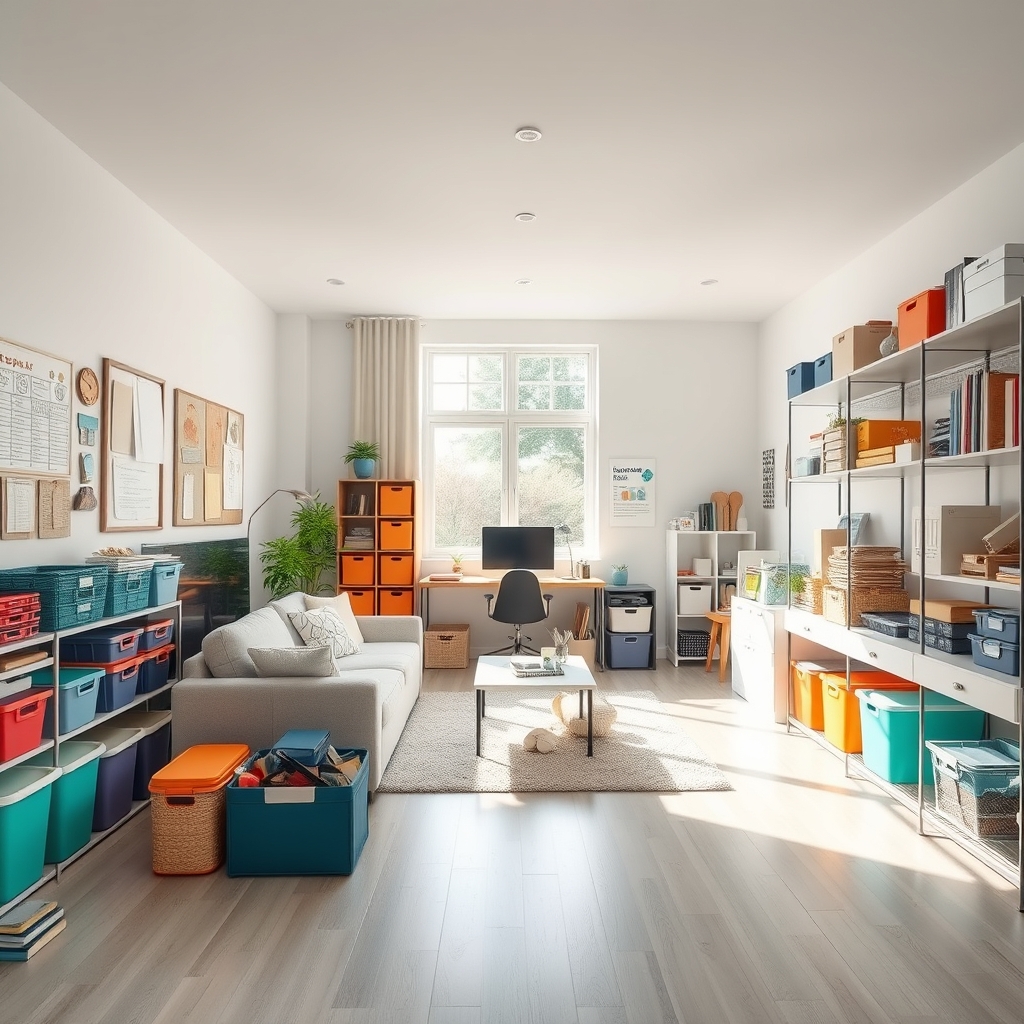
If implementing the above reveals persistent overwhelm or repeated backsliding, consider hiring a licensed ADHD coach or experienced professional organizer. Sometimes a quick session with outside accountability resets everything.
Conclusion
Building an ADHD-friendly organization system isn’t about rigid rules or chasing perfection—it’s about creating visible, low-friction paths so your future self can thrive even on low-motivation days. Bold labels, minimal options, and grab-and-go resets make organization sustainable for your brain and life. Ready to simplify your home? Try one small ADHD-friendly organization system tweak today—and notice what works best for you.
Want more room-by-room organization? Check out our guides on How to Declutter a Small Home and Bedroom Storage Solutions for more actionable tips!
FAQ
How do I keep from forgetting items in storage?
Keep everything visible using open shelves, clear bins, and bold labels. If it’s out of sight, it’s usually out of mind for ADHD brains. Make your “system” impossible to miss.
What’s the fastest way to reset a cluttered space?
Use a reset kit: grab a small basket, a 10-minute timer, and a short, specific checklist. Focus only on the visible surfaces or one “zone.” A timer makes the task finite and less overwhelming.
Should I use digital apps for organizing?
Most adults with ADHD find that physical cues—visible checklists, labels, and wall calendars—outperform digital apps, which are easy to ignore or forget to open.
How many categories should I make per space?
Limit to 2–3 categories per zone. More than that increases decision fatigue and makes it hard to keep up with routines. If you notice drop-off, reduce again.
How do I get started if I’m totally overwhelmed?
Don’t aim for perfection. Choose one small “launch pad” or a single shelf to organize with visible bins and a timer. Use the “body-double” method—work alongside a friend or coach to boost initiation and momentum.
—