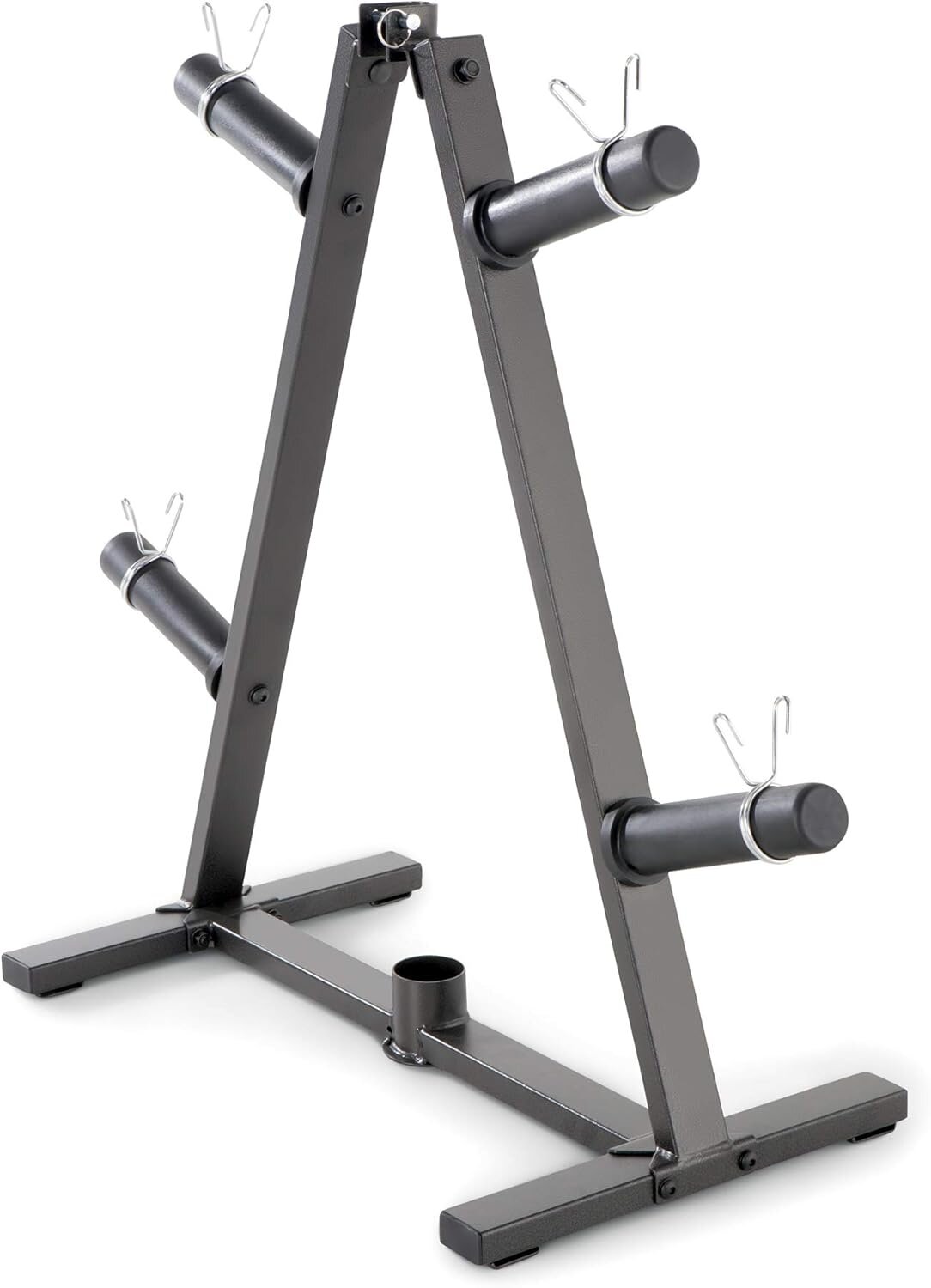
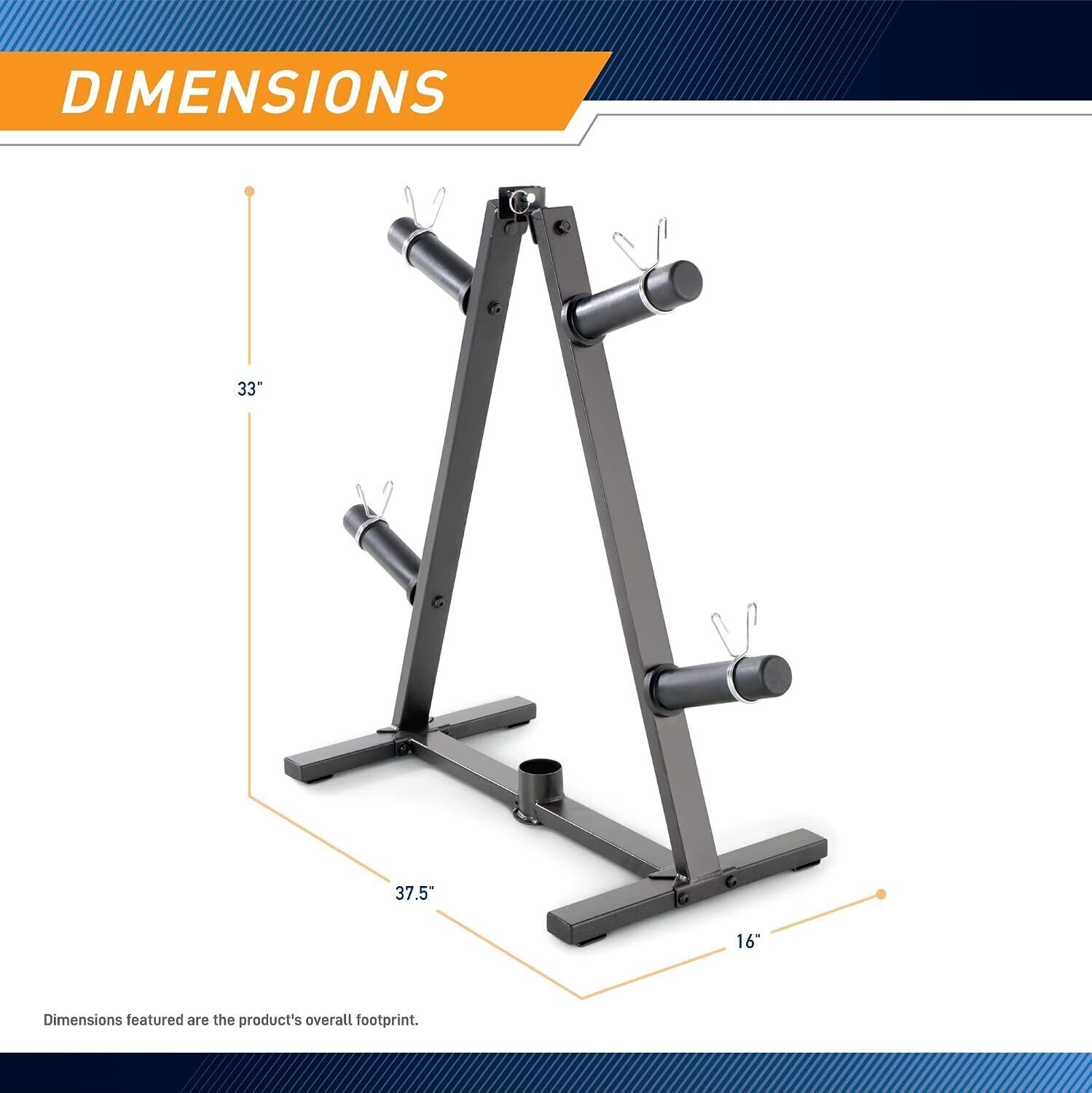
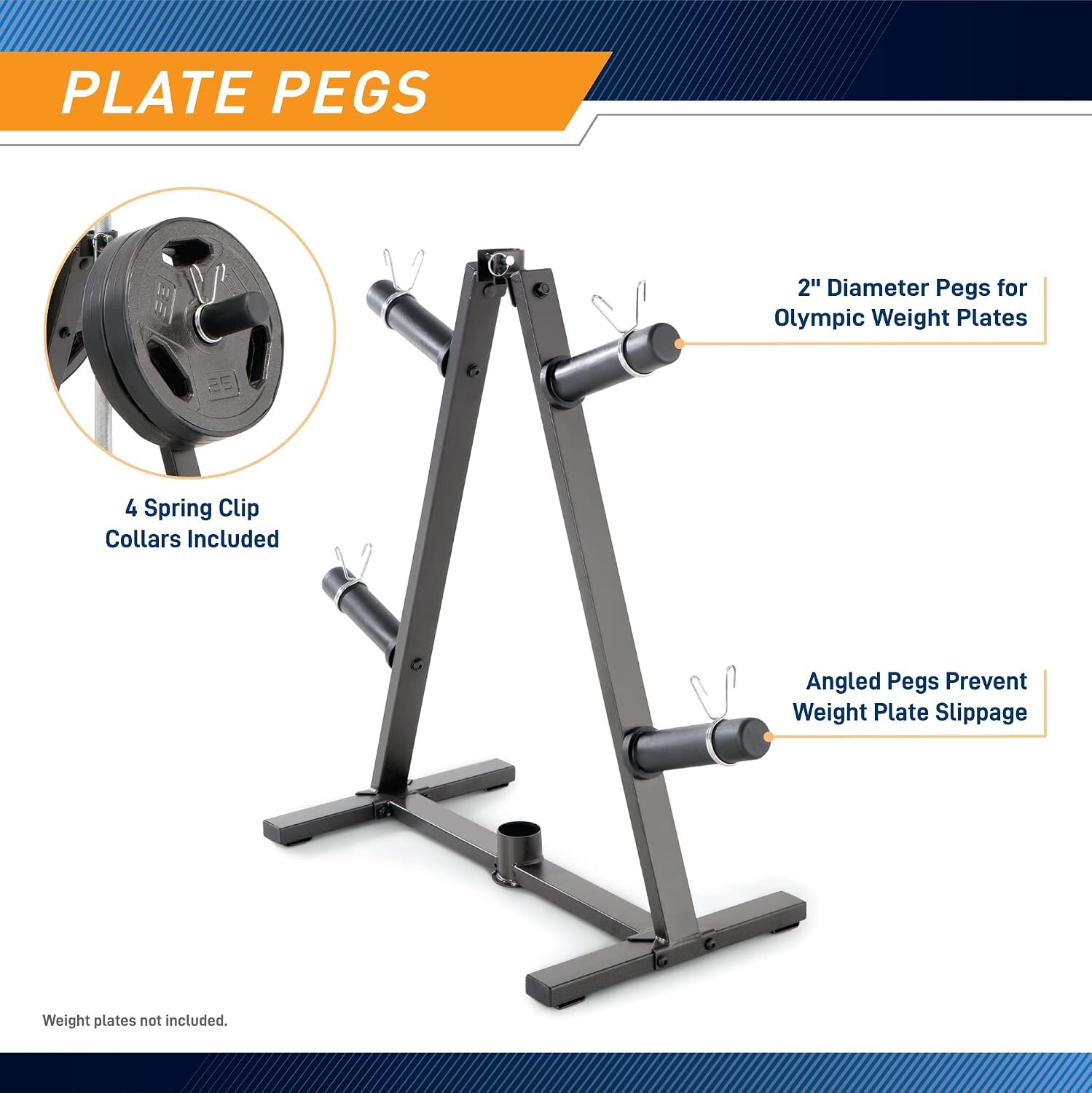
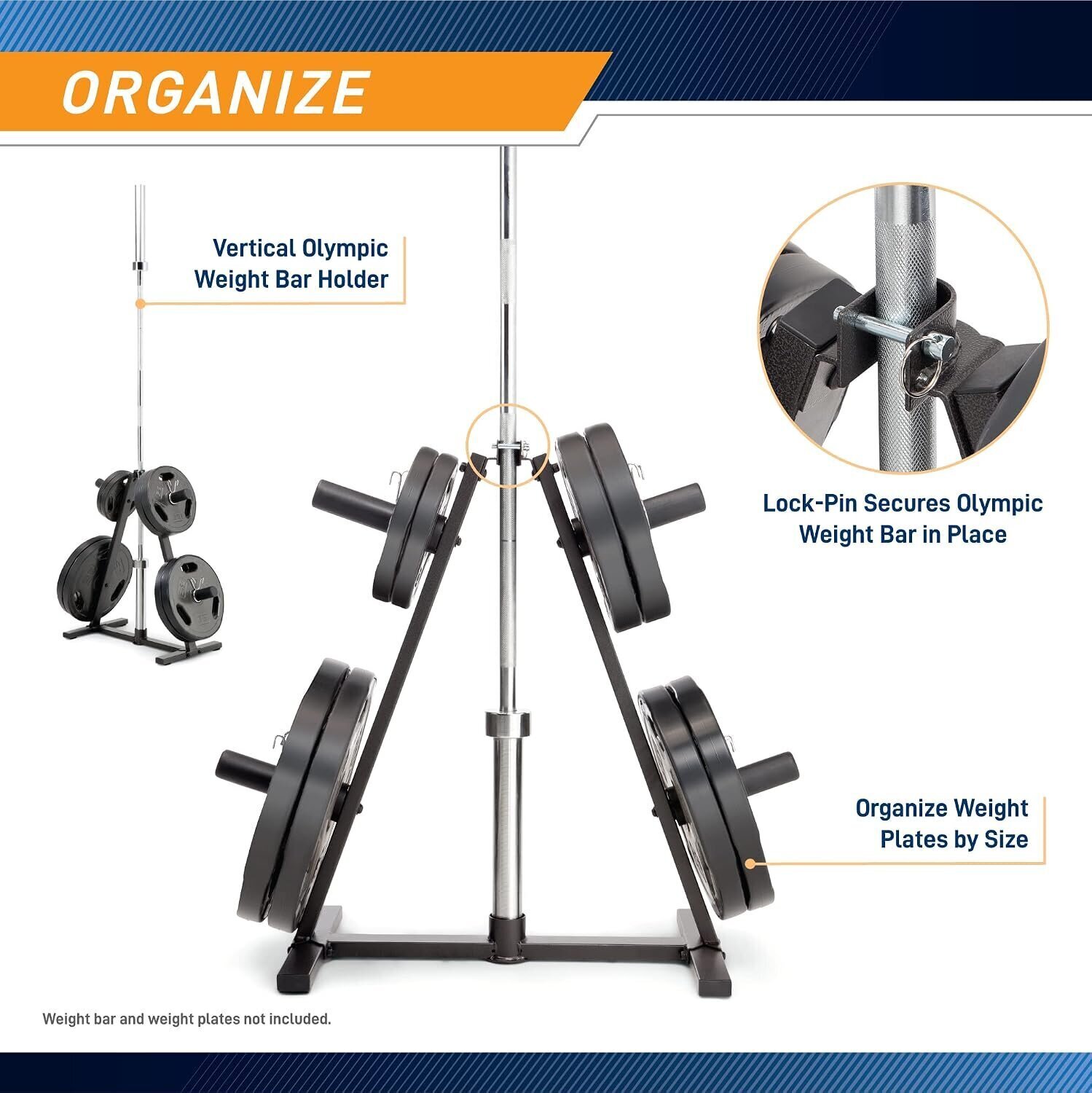
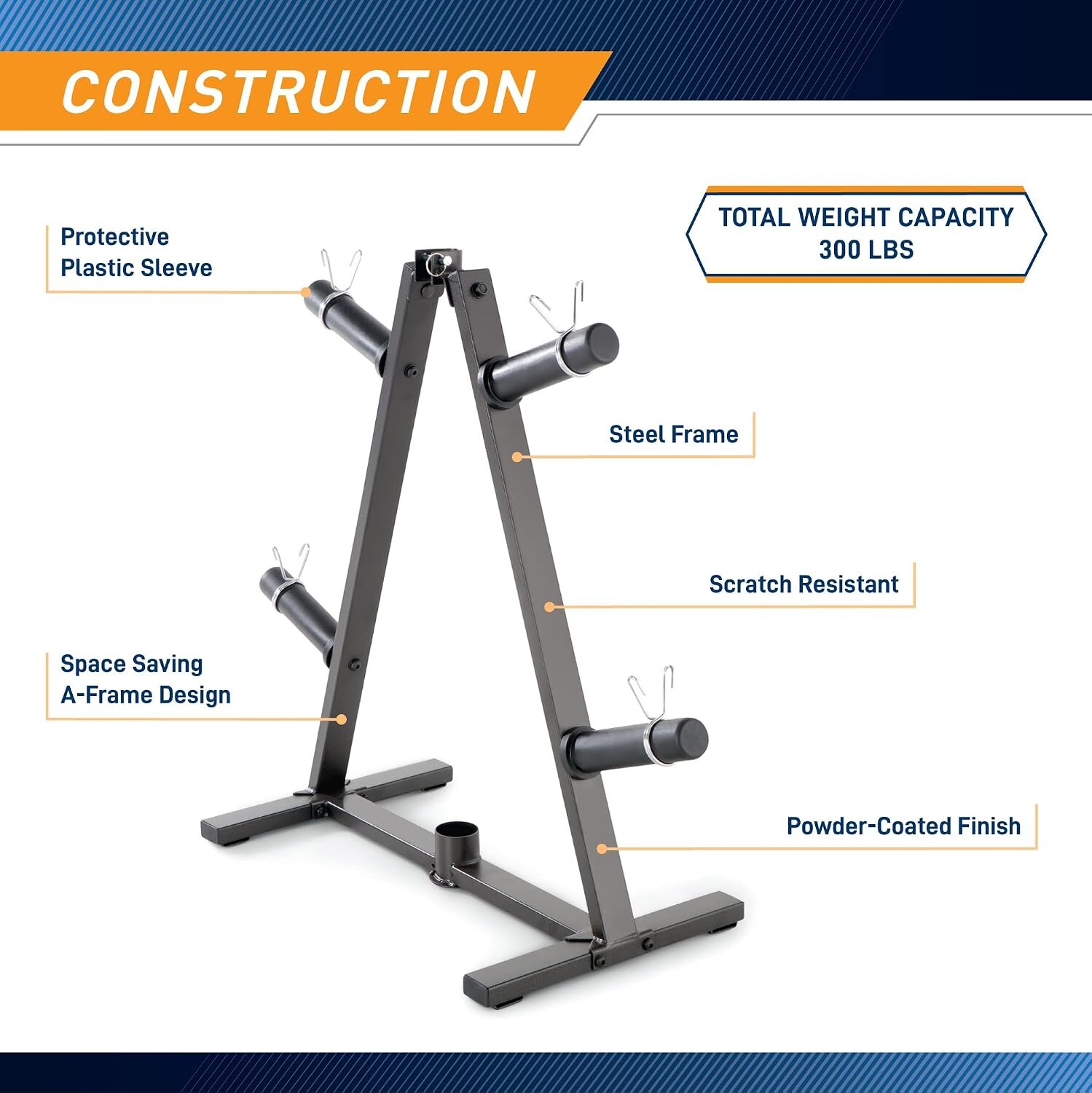

Our evaluation found the MARCY Olympic Weight Plate Tree for 2-Inch Plates to be a sturdy and space-saving gym organizer, ideal for home gym enthusiasts with limited space. Built from durable steel and supporting up to 300 pounds, it features secure weight collars to keep Olympic plates firmly in place across four pegs. This rack excels at keeping workout areas organized while withstanding daily use, making it best suited for users with moderate to heavy Olympic plate sets. A primary limitation is its suitability only for 2-inch diameter Olympic plates, which may not fit standard or smaller plates.
As an Amazon Associate, this site earns from qualifying purchases made through links on this page. This does not affect the price you pay.
Table of Contents
Olympic Weight Plate Tree – Complete Review 2026
An olympic weight plate tree solves one of the most persistent problems in a home gym: what to do with a growing stack of plates once the workout is over. Loose plates end up leaning against walls, sliding under benches, or piled on the floor where they become a tripping hazard. A dedicated rack changes that by giving every plate a fixed home.
The category itself is fairly mature. Most designs share the same basic idea: a welded steel frame with horizontal pegs sized for the standard 2-inch center hole found on Olympic plates, mounted on a base wide enough to keep the whole thing from tipping once it’s loaded. Where models differ is in peg count, overall footprint, and whether the frame also includes a barbell holder or accessory pegs for collars and clips.
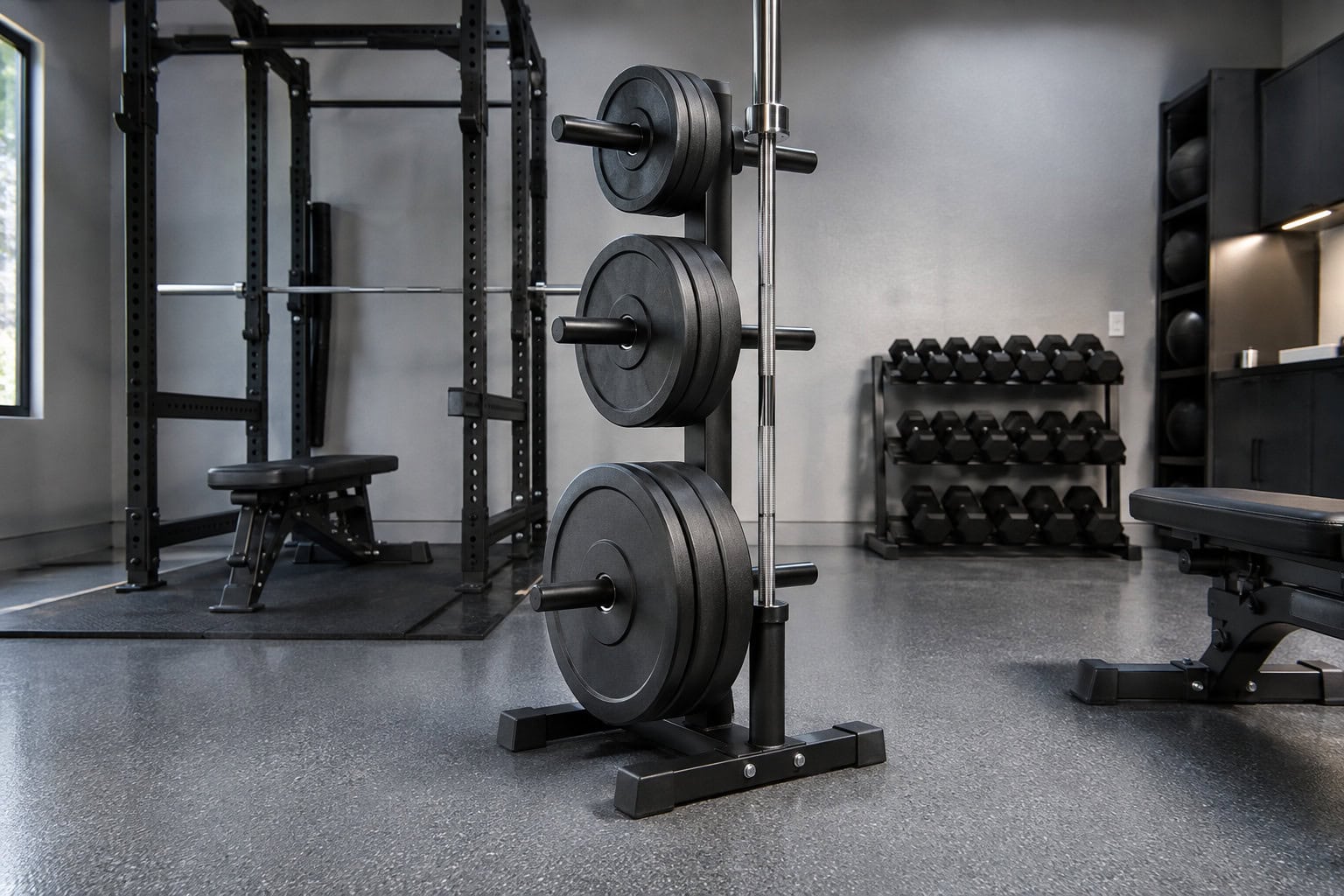
Buyers researching this category on forums tend to focus on the same handful of details: how much total weight the frame can hold, how easy assembly is, and whether the pegs actually protect the plates’ finish. On a popular home gym thread, one owner noted the rack holds a solid amount of weight and comes with rubber stoppers that keep the plates from grinding against bare metal, which lines up with what most reviewers in this space report.
Key Features of the Olympic Weight Plate Tree
- 2-inch peg diameter: Sized to match standard Olympic plate bore holes, so bumper and iron plates from different brands generally slide on without modification.
- Horizontal peg layout: Plates stack flat rather than standing on edge, which keeps the load low and reduces the chance of a plate rolling off during storage.
- Welded steel base: A wider footprint at the bottom distributes weight and resists tipping once several plates are loaded on one side.
- Rubber or vinyl end caps: Protect plate coatings from scratching against bare steel pegs, which matters most for bumper plates with painted numbering.
- Integrated barbell holder (on some models): Lets the bar rest horizontally alongside the plates instead of needing separate wall mounts.
Each of these design choices trades off against something. A wide, stable base takes up more floor space, and horizontal peg storage generally holds fewer plates per vertical inch than an angled or upright rack would. For a garage or basement gym with limited square footage, that’s a real consideration before buying rather than after.
Performance and Practicality
Capacity is the number most shoppers fixate on, and it’s worth reading carefully. Manufacturers typically list total weight capacity across all pegs combined, not per peg, so a rack rated for a few hundred pounds might only hold two or three plates per side once you do the math. The physical footprint matters just as much: a frame with a wide base needs floor clearance on all sides, which can be a problem in a narrow garage bay or a shared basement space.
Assembly is generally straightforward on this style of olympic weight plate tree, since most ship as a bolt-together frame with pre-drilled holes rather than requiring welding or custom fitting. Garage Gym Reviews, which tests strength equipment for a living, points out that the better-built trees in this category combine solid durability with enough storage capacity to actually hold a full plate set, which is a fair benchmark for judging any rack in this price range.
If you’re working with a tight footprint already, it’s worth comparing floor-standing racks against wall-mounted options covered in our guide to clever small-space storage ideas, since some of the same space-saving logic applies to a garage gym corner as it does to a bedroom closet.
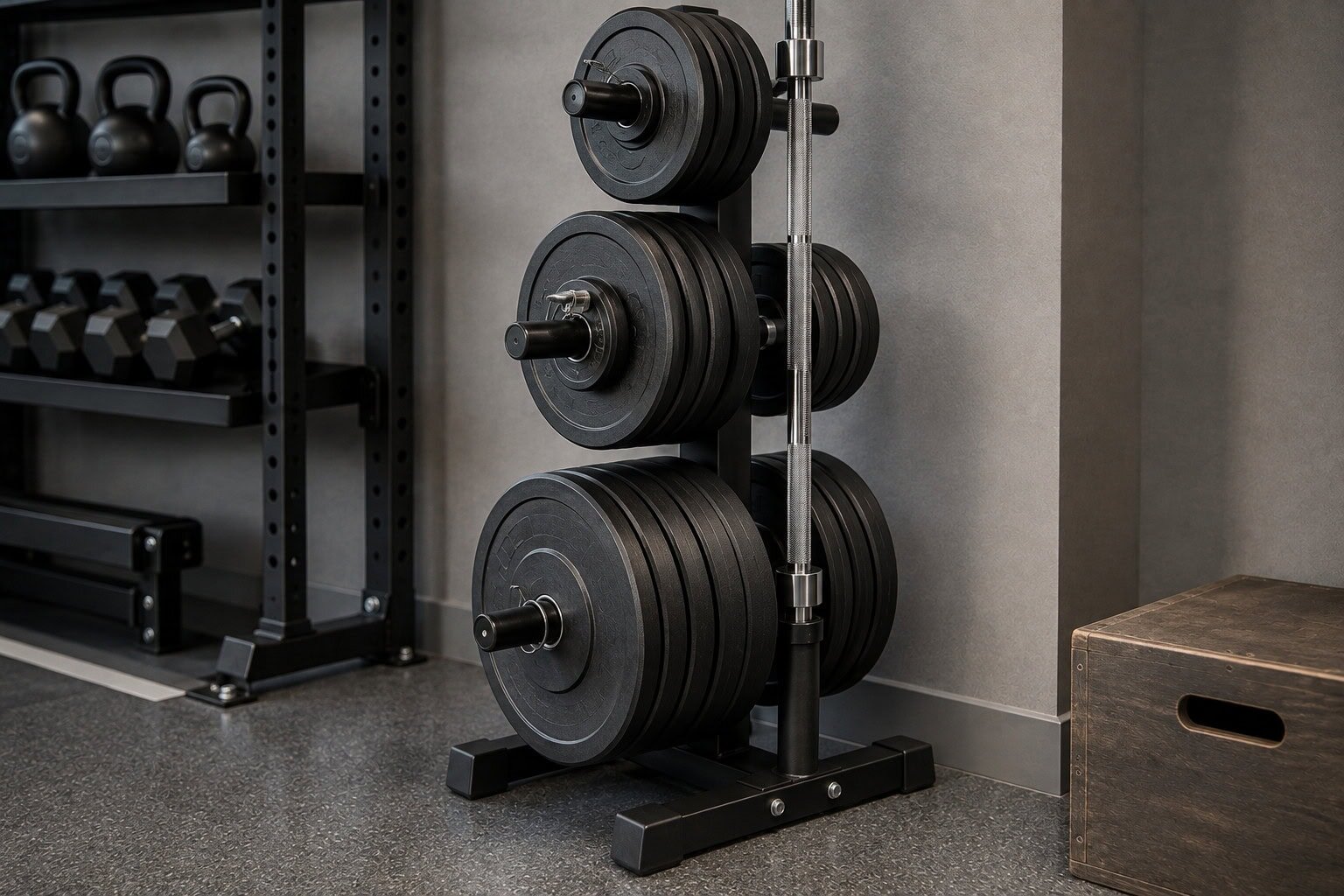
How It Compares to Alternatives
Plate trees aren’t interchangeable just because they look similar in photos. Peg count, base width, and whether a barbell holder is built in all shift who a given rack actually suits. The table below lines up a few common options side by side.
| Model | Peg Style | Barbell Holder | Best For | Price |
|---|---|---|---|---|
| Standard Olympic Plate Tree | Horizontal, 2″ pegs | Sometimes | Budget garage setups | Check Price |
| Marcy Weight Storage Rack | Angled multi-tier | No | Mixed plate and dumbbell storage | Check Price |
| Bells of Steel Bumper Plate Tree | Reinforced horizontal | Yes | Heavy bumper plate collections | Check Price |
The Marcy option leans more toward general weight storage than plate-specific pegging, which suits someone with a mixed collection of dumbbells and plates rather than a pure barbell setup. The Bells of Steel model adds reinforcement aimed at heavier bumper plates, which matters for anyone loading a rack with 45-pound bumpers rather than lighter iron plates.
Who Should Buy This Product?
- Home gym owners with a growing plate collection: Once you own more than four or five plates, loose storage stops being practical, and a dedicated rack keeps the floor clear.
- Garage or basement setups with limited wall space: A floor-standing tree doesn’t require drilling into studs the way a wall-mounted rack does.
- Anyone rotating between bumper and iron plates: The rubber end caps help protect painted bumper plate coatings from scratches during storage.
It’s a weaker fit for anyone with only two or three plates, since the footprint of even a compact tree may not be worth it for such a small collection. In that case, a simple wall hook or under-bench storage bin might make more sense. Readers building out a full garage system might also want to browse our roundup of modular closet organization systems for ideas on adapting closet-style shelving to gym equipment.
Frequently Asked Questions
Do all Olympic plates fit on a standard plate tree?
Most do, since Olympic plates share a 2-inch center hole regardless of brand. It’s still worth checking peg length against your heaviest plates, since very thick bumper plates take up more room per peg than thin iron ones.
How much floor space does an olympic weight plate tree actually need?
That depends on the base width and peg orientation, but plan for clearance on at least two sides so you can slide plates on and off without knocking into a wall or bench.
Can a plate tree double as a barbell holder?
Some models include a built-in bar cradle, while others are plate-only. If bar storage matters, check the product listing specifically rather than assuming it’s included.
Is a heavier, welded frame always better than a bolt-together one?
Not necessarily. A welded frame tends to be more rigid, but a well-designed bolt-together model can still hold a full plate set securely. Assembly quality and base width matter more than whether the joints are welded or bolted.
Choosing between a compact plate tree and a larger multi-tier rack ultimately comes down to how many plates you own now and how many you expect to add. A rack sized for today’s collection with little room to grow will need replacing sooner than one built with a bit of spare capacity. For most home gyms, an olympic weight plate tree with a stable base, protected pegs, and a footprint that matches the available floor space is the more practical long-term choice over a bare-bones budget option.