

Van life storage ideas have evolved into a science of payload-smart engineering, modularity, and real-world durability. The best storage systems for Sprinter, Transit, and ProMaster van builds aren’t just about cramming in more shelves—they’re about bolt-on flexibility, keeping within weight ratings, compliant mounting, and future-proofing for easy upgrades or fixes. Here’s how to choose and install van-life storage like a pro, backed by tested product data and industry standards.
Ready to maximize your van’s space, stay legal, and build in a way you won’t regret? Start below for practical options, proven advice, and checklists built for real-world DIYers and pros alike.
Key Takeaways
- Start planning with the bed system to define your layout; select modular shelving and kitchen storage that meet your payload and legal constraints.
- Favor bolt-on, weight-rated, aluminum or hybrid shelving—with engineered brackets or rivnuts—over cheaper, moisture-prone materials and random fasteners.
- Use a step-by-step weight budget and avoid permanent installs that block access or ignore service and condensation/ventilation.
- What Are Modular Van Life Storage Ideas? (And Why They Matter)
- How to Choose and Install Modular Van Storage: Step-by-Step Guide
- Advanced Analysis & Common Pitfalls: Mistakes, Trade-Offs, and Decision Tips
- Conclusion: Smarter Van Life Storage for Every Build
- Frequently Asked Questions
What Are Modular Van Life Storage Ideas? (And Why They Matter)
Modular van life storage ideas are flexible, payload-conscious shelving, bed, and organizer options that can be bolted, mounted, removed, or reconfigured inside any Sprinter, Transit, or ProMaster van. They offer adaptability for changing needs, straightforward installation for DIYers, and compliance with load and safety standards—unlike fixed, heavy wooden furniture or ad-hoc bins.
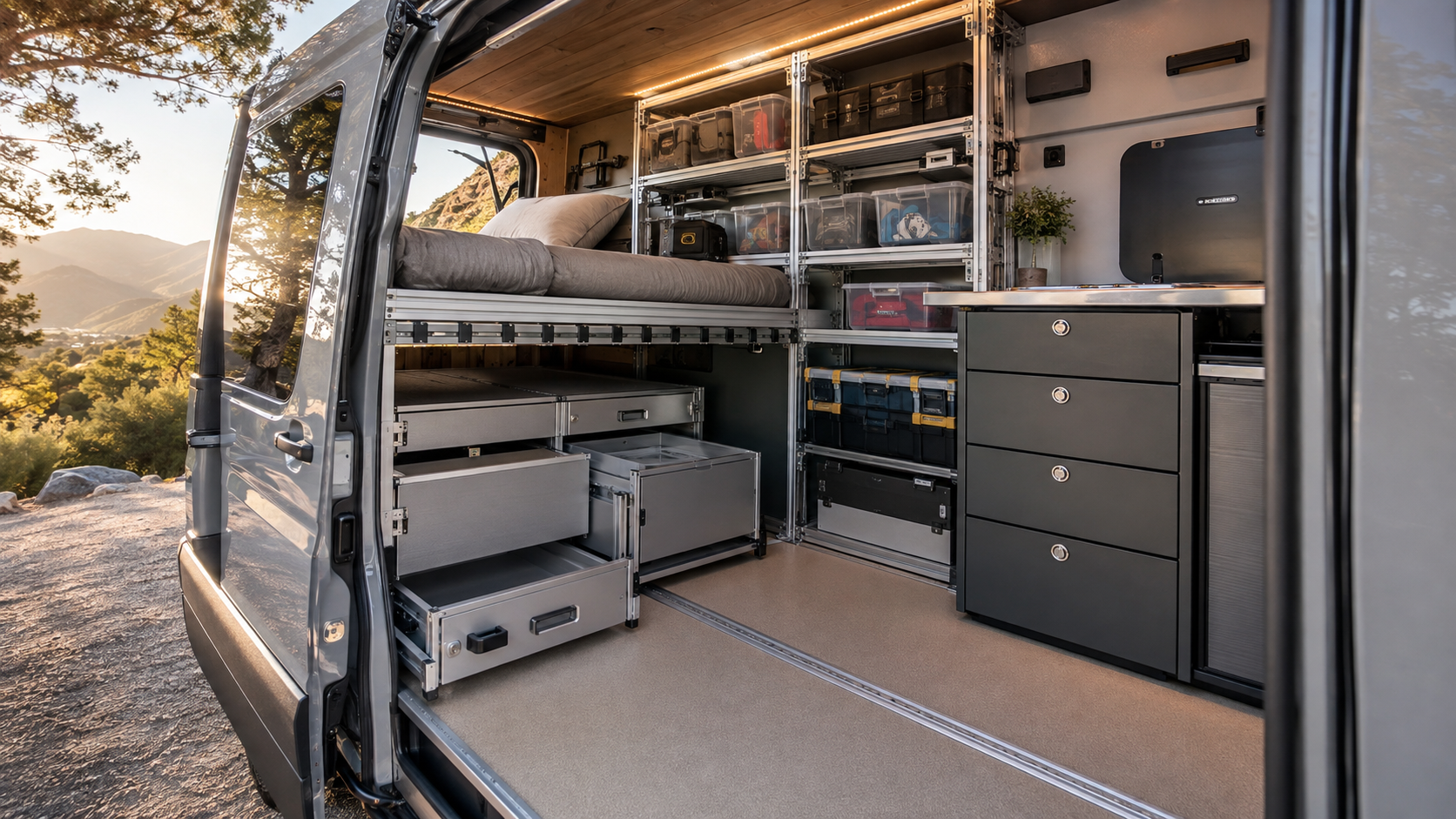
These systems help single travelers, couples, and small families make the most of limited space without risking overweight fines, unsafe installs, or future maintenance headaches. The essentials include:
- Rail-mounted platform bed kits (e.g., RB Components, Flatline Van Co) for adjustable sleeping/garage zones.
- Hybrid aluminum/steel “Fleet Series” and all-aluminum “Pro Series” shelving (from top suppliers like Advantage Outfitters).
- Fold-away gas-strut shelves, under-bed drawers, and a suite of accessories: headliner shelves, Velcro mesh pouches, seat-back organizers, and more.
Modular options give you durable, lightweight, and reconfigurable storage—essential for van lifers who are always optimizing, upgrading, or responding to new gear or travel needs. Beware: poorly planned or overloaded builds can lead to layout regrets, fines, leaks, or even gear flying loose during hard stops (see The Vansmith).
For even broader small-space inspiration, check these declutter small home strategies or the best closet organization systems if your van needs to double as a closet or office.
How to Choose and Install Modular Van Storage: Step-by-Step Guide
Follow this sequence for a standards-compliant, future-proof build—avoiding the mistakes seen in rushed van conversions:
- Start with the bed layout. Plan your bed height first—it dictates garage volume, headroom, and fits for shelving or drawers below.
- Define your main use: Adventure/gear, contractor/tool, or family? This changes whether you need slide-out drawers, open shelving, or modular garage pods, and which overhead cabinets make sense (The Vansmith).
-
Prepare your weight budget:
- List expected weights for insulation, batteries, water, shelving, bed kits, and stored cargo.
- Check your vehicle’s GVWR and axle limits—not just the overall payload (Advantage Outfitters).
Sample Weight Budget Worksheet Item Qty Unit Weight (lb) Total (lb) Insulation panels 12 2.5 30 Lithium batteries 2 32 64 Platform bed kit 1 85 85 Fleet/Pro shelving 2 48 96 Kitchen pod 1 60 60 Water tank (full) 1 100 100 Total 19 — 435 - Select modular systems: Use the table below to compare top options by cost, install time, durability, and mounting style.
- Double-check mounting points—prefer brackets with rivnuts into reinforced floor or bulkhead, not thin wall panels.
- Leave room for service: Make access panels for future wiring, battery, and water system maintenance.
- Plan for moisture: Use closed-cell insulation and vapor barriers, especially in kitchen/bed areas.
- Schedule extra time: Allot more days for complex bolt-ons, or book pro installation to avoid rushed mistakes.
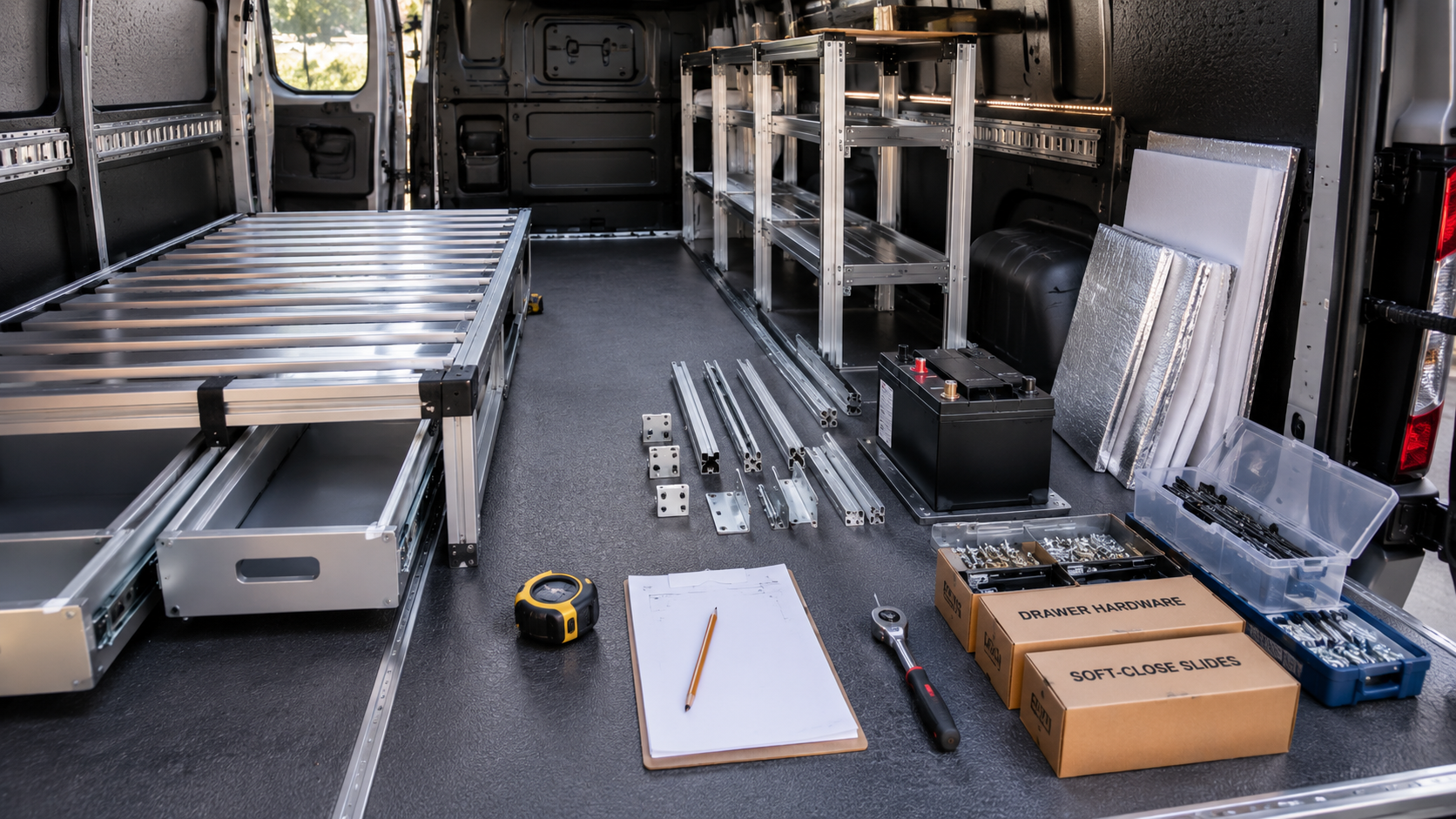
Top Modular Van-Life Storage Systems Compared
| System | Typical Cost | Install Time | Mounting Method | Durability Rating (1–5) |
|---|---|---|---|---|
| Rail-mounted platform bed (RB Components/Flatline) | $1,200 | 2–4 hr | Bolt-on to van rails/walls | 4 |
| Fleet Series hybrid shelving | $450/unit | 1–2 hr | Floor-mount brackets | 4.5 |
| Pro Series all-aluminum shelving | $650/unit | 1–2 hr | Floor/bulkhead with brackets | 5 |
| Fold-away gas-strut shelves | $850/set | 3–5 hr | Side brackets, gas shocks | 4.5 |
| Under-bed pull-out drawers | $275/ea | 1 hr | Screw or slide bolt | 4 |
| Headliner shelf | $200 | 1 hr | Adhesive/screw-on | 3.5 |
| Velcro mesh pouch | ≤$30 | minutes | Clip/Velcro | 3 |
| Seat-back organizer | $55 | minutes | Clip-on | 4 |
| Owl Vans external cargo box | $250 | 1–2 hr | Bolt-on door/luggage rack | 4 |
| Packing cubes | $30–$45 | none | N/A | 3 |
Advanced Analysis & Common Pitfalls: Mistakes, Trade-Offs, and Decision Tips
Many competitor guides skip these critical factors—leading to avoidable errors and even illegal van builds.
Key Trade-Offs & Mistakes
- Rushed timelines and poor serviceability: Pros schedule 2–3 months; DIYs over weekends can take 6–9 months. Rushing risks mistakes (The Vansmith).
- Ignoring weight budget: Most overbuild or forget water, batteries, and even insulation shrinkage, risking GVWR/axle overload. Use full weight worksheets; confirm with scales before and after install.
- Unsafe mounting: Single screws into flimsy walls vs. proper rivnut brackets into reinforced bulkheads. Use rivnut or OEM points for safety—meets SAE J2840 guidelines.
- Non-compliant materials: Cheap plywood and particle board can fail with road moisture and don’t always meet FMVSS 302 flammability codes. Go all-aluminum or marine plywood where possible.
- No service/vent planning: Permanent cabinetry sometimes blocks wiring/battery compartments. Always leave access panels and design for future upgrades or repairs.
Get more detail in these pro resources on common planning mistakes and budget-friendly garage storage.
Emerging Products & Trends for 2024+
- Boost Box & modular garage pods: Weather-sealed, lockable compartments for bikes, tools, or even fridges, now shipping from leading vendors for rear/under-bed zones.
- Quick-release shelving: New “VanSolution” style combines bolt-down factory shelving with custom slide-out trays and rivnut mounting, blending pro durability and DIY flexibility.
- Built-in weight sensors: Select new modular shelving and bed kits include wireless payload readouts to prevent accidental overloading.
- Insulated panel kits: Bio-based foams and pre-cut vapor barriers are trending for builds in damp or cold climates—faster, more mold-proof installs (FarOutRide).
For custom installs, see commercial van experts’ upfitting guides.
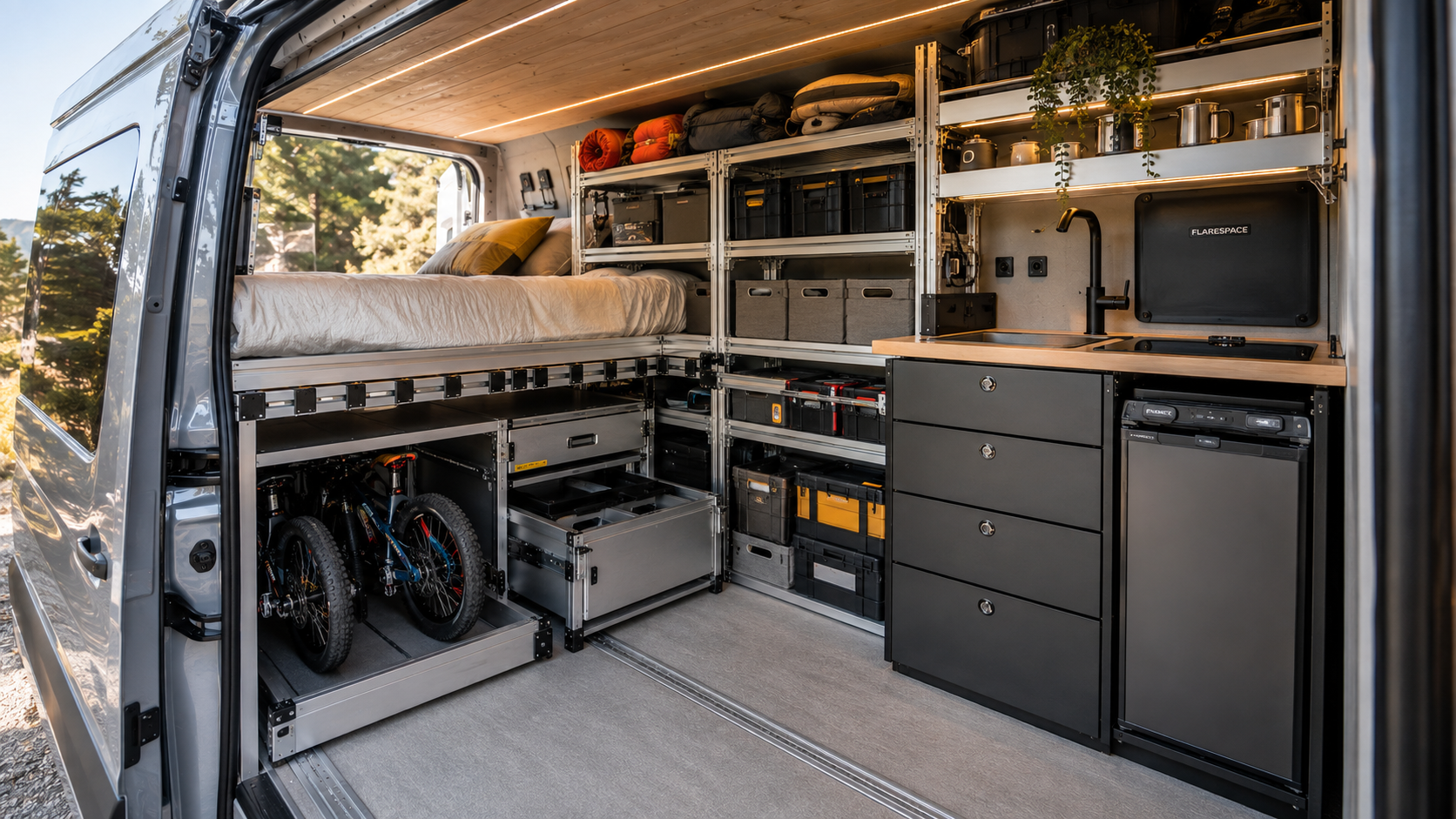
Conclusion: Smarter Van Life Storage for Every Build
The right van life storage ideas put accessibility, durability, and legal safety first. Start by mapping your layout around a modular bed, run a real weight budget, and only buy bolt-on, standards-rated shelving or kitchen organizers that fit your exact van. Always check for reinforced mounting points, plan for access and future upgrades, and don’t compromise on moisture or vibration protection. Ready to build your best van? Gather your exact needs, compare modular solutions, and proceed step-by-step: safety, flexibility, and comfort on the road are all within reach.
For further smart-space inspiration, explore bedroom storage hacks, compact kitchen organization systems, and our full guide to modular closet upgrades.
Frequently Asked Questions
How much does a modular platform bed with drawers usually cost and how hard is it to install?
Most full-size rail-mounted bed kits (e.g., RB Components, Flatline Van Co) cost around $1,200, with under-bed drawers adding about $275 each. Installation is generally bolt-on and takes 2–4 hours for an intermediate DIYer using basic tools—no welding or complex cutting required.
How do I create a weight budget for shelving, insulation, and batteries so I don’t exceed GVWR?
List out every major item—insulation, batteries, water tanks (filled), shelving, bed frames, and anticipated gear. Add up total weight, then compare to your van’s empty curb weight and GVWR/axle limits. Always leave at least a 10% buffer. Use our sample worksheet above as a starting point.
What mounting methods are safest for van shelving—floor bolts, rivnuts, or panel screws?
Floor-mounted brackets and rivnuts into reinforced OEM points provide the strongest, safest attachment—key for crash safety and long-term vibration resistance. Avoid relying on simple screws into wall panels, which lack strength and can fail under load.
Which shelving materials resist moisture and vibration best for long-term van life?
All-aluminum shelving (e.g., Pro Series) offers top resistance to corrosion, moisture, and vibration. Hybrid aluminum/steel (Fleet Series) is also excellent. Avoid particle board and untreated plywood in moist areas, as they degrade over time and under road shock.
What common layout mistakes should I avoid when planning kitchen and under-bed “garage” storage?
The biggest mistakes are designing around kitchen cabinets first (which can crowd space and block windows/vents) and setting the bed too low for meaningful garage storage. Always plan your bed height first, leave room for bike or gear storage beneath, and favor bolt-on/removable kitchen organizers for flexibility and maintenance access.